Affiliate Software Pricing in 2026: 12 Platforms Compared



TL;DR
Affiliate software pricing in 2026 ranges from free to $5,000+ per month. Budget tools like GoAffPro and Trackdesk cost nothing to start, mid-market platforms run $49 to $299 monthly, and enterprise solutions like Impact.com, PartnerStack, and TUNE start at $500 to $1,500 per month before transaction fees. The sticker price rarely tells the full story. Transaction fees, revenue caps, and implementation costs can double your actual spend. This guide breaks down real pricing for 12 platforms, models what you’ll actually pay at different revenue levels, and covers the hidden costs most comparison pages skip.
Who This Guide Is For
This guide is built for brand marketers, founders, affiliate program managers, and ops leads who are comparing affiliate software pricing before making a purchase decision. Maybe you received a quote from Impact.com or PartnerStack and want to sanity-check that number. Maybe you’re launching your first affiliate program and need to understand what “free” really means. Or maybe your current tool is getting expensive and you want to know what alternatives exist at your revenue level.
If you’re just getting started, our guide on how to start an affiliate program covers the strategic groundwork before you pick a platform.
Quick Answer: What Does Affiliate Software Cost in 2026?
Most affiliate tracking software costs between $0 and $299 per month for small-to-mid-sized programs, while mid-market and enterprise partnership platforms typically run from $500 to $5,000+ per month (or $15,000 to $100,000+ per year) before partner commissions and implementation fees.
Testing and Early-Stage ($0 to $99/month): Best for validating affiliate demand on Shopify, WooCommerce, or Stripe without heavy fixed overhead. Watch closely for monthly revenue caps and 1% to 3.5% transaction or payout fees. Scaling Mid-Market ($99 to $500/month): Best when you need multi-tier commissions, custom domains, API access, or higher conversion and revenue limits. Enterprise and Networks ($500 to $5,000+/month): Best when you need an existing publisher or creator network, multi-partner tracking, dedicated support, or custom integrations.
At-a-Glance Comparison Table
Platform | Starting Price | Pricing Model | Transaction/Revenue Fee | Best For | Rating |
|---|---|---|---|---|---|
GoAffPro | $0 | Freemium | None | Shopify stores testing affiliate | G2: 4.6 |
UpPromote | $0 / $29.99/mo | Subscription + % | 1–2% of referral sales | Shopify-native programs | 4.9 (Shopify) |
Trackdesk | $0 (up to $1K rev) | Revenue-gated free | None stated | SaaS startups validating | G2: 4.7 |
Rewardful | $49/mo | Flat subscription | 0% (3% if managed payouts) | Stripe-native SaaS | — |
FirstPromoter | $49/mo | Flat subscription | None stated | SaaS affiliate + referral | G2: 4.8 |
Tolt | $69/mo | Flat + payout fee | 2% on automated payouts | Early-stage SaaS | — |
Tapfiliate | $89/mo | Flat subscription | Overage fees on clicks/conversions | SaaS + ecommerce mid-market | 4.5 |
Refersion | $0 / $39/mo | Subscription + % | 2–3% of affiliate sales | Shopify/WooCommerce with marketplace | — |
Post Affiliate Pro | $129/mo | Flat subscription | None | Complex commission structures | G2: 4.5 |
Awin | $99/mo | Subscription + % | 2.5–3.5% of transactions | Network-driven consumer brands | — |
Impact.com | $30/mo (Starter) | Tiered + % | 2.5% per transaction | Enterprise multi-partner | — |
PartnerStack | ~$1,000/mo (est.) | Quote + % | 3–15% of partner payouts | B2B SaaS ecosystems | — |
Everflow | ~$750/mo (est.) | Quote-based | Revenue-linked | High-volume performance marketing | — |
TUNE | $1,500/mo | Flat + conversion cap | Conversion-based overages | Enterprise CPA networks | — |
The Four Affiliate Software Pricing Models Explained
Before comparing individual platforms, it helps to understand the four distinct pricing structures in the market. Each model carries different cost implications depending on your program’s size and growth trajectory.
Flat subscription with revenue caps. You pay a fixed monthly fee, but the plan limits how much affiliate-driven revenue you can process. Exceed the cap, and you’re forced to upgrade. Rewardful, FirstPromoter, and Tolt use this model. It’s predictable until you outgrow a tier.
Flat subscription with usage meters. The monthly fee is fixed, but the platform meters tracking requests, clicks, or conversions. Post Affiliate Pro and Tapfiliate fall here. Overage charges apply when you exceed thresholds.
Subscription plus percentage of attributed revenue. You pay a base fee and a percentage of every sale your affiliates generate. Impact.com, Refersion, UpPromote, and Awin all work this way. The variable component means costs scale directly with success, which can get expensive at high volume.
Fully custom or quote-based. PartnerStack, Everflow, and TUNE don’t publish pricing. You request a demo, describe your program, and receive a custom quote. Contracts often run 12 to 24 months with minimum commitments. This model is built for mid-market and enterprise programs.
For a deeper look at picking the right affiliate platform based on your program’s needs, we’ve published a separate decision framework.
Which Pricing Tier Fits Your Program Stage?
Program Stage | Monthly Affiliate Revenue | Typical Monthly Software Spend | Best Pricing Model | Key Watchout |
Validation / Launch | $0 to $5,000 | $0 to $99 | Freemium, low flat fee, or small % fee | Free tiers often restrict features, affiliate counts, or marketplace reach |
Early Growth | $5,000 to $20,000 | $49 to $250 | Flat subscription or low % fee | Revenue caps ($5K–$15K/month) can trigger sudden tier jumps |
Scaling Mid-Market | $20,000 to $100,000 | $150 to $1,500 | Tiered SaaS or hybrid plan | Percentage fees (1.5%–3.5%) can overtake flat subscriptions |
Enterprise / Multi-Partner | $100,000+ | $1,500 to $5,000+ | Custom contract or enterprise tier | Setup fees, annual minimums, and add-on modules (API, fraud, SSO) |
Platform-by-Platform Pricing Breakdowns
1. GoAffPro
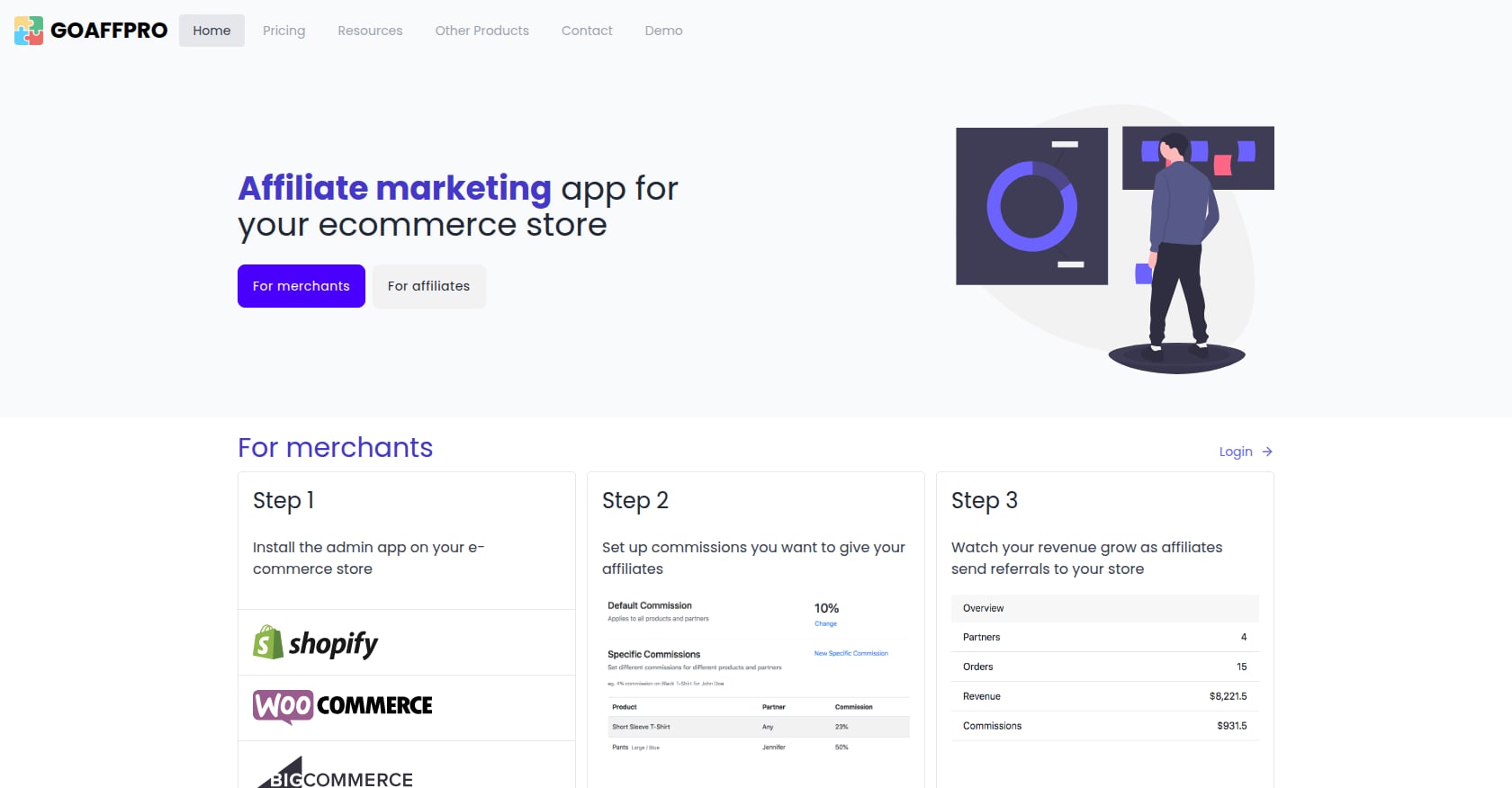
Best for: Shopify and WooCommerce stores testing whether the affiliate channel is worth pursuing.
Pricing:
Free Forever plan with unlimited affiliates
Premium tiers available for advanced features
Key features:
No cap on the number of affiliates you can onboard
Integrates with Shopify, WooCommerce, and other ecommerce platforms
Basic commission management and tracking
G2 rating: 4.6
Tradeoffs:
Fraud detection is basic compared to paid alternatives
No enterprise features like multi-tier commissions or advanced reporting
Limited customization for brands that need white-label experiences
GoAffPro makes sense when you’re validating whether affiliates can move the needle before committing budget. It won’t scale with you past the early testing phase, but that’s not what it’s built for.
2. UpPromote
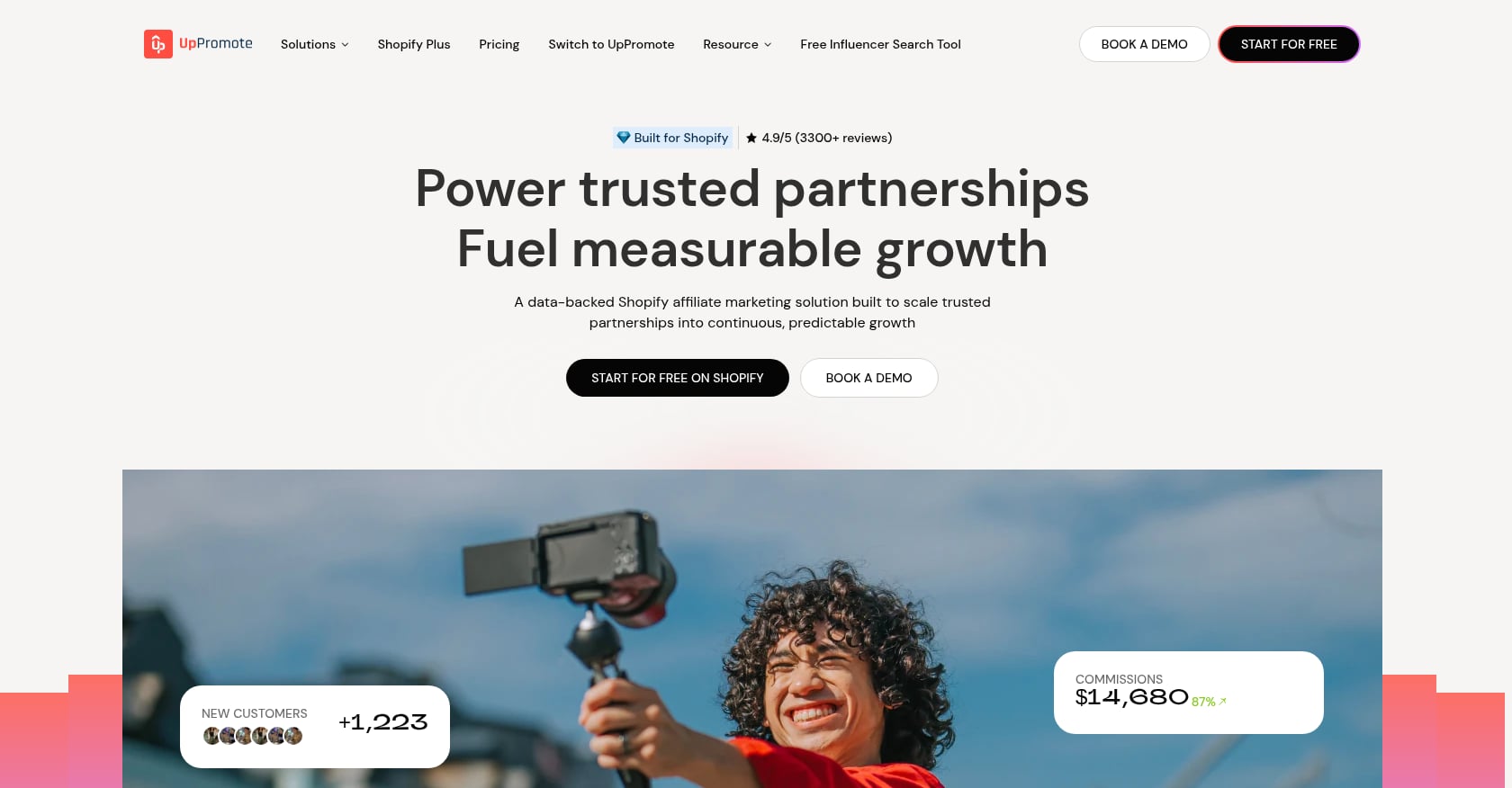
Best for: Shopify-only stores wanting deep native integration without leaving the Shopify ecosystem.
Pricing (as of June 2026):
Free: $0/month
Growth: $29.99/month + 2% of referral sales
Professional: $89.99/month + 1.5% of referral sales
Enterprise: $199.99/month + 1% of referral sales
Key features:
Rated 4.9 out of 5 from 3,937 reviews on the Shopify App Store
Native Shopify integration, no external setup needed
Automated commission tracking and payouts
In-app affiliate marketplace for recruitment
Tradeoffs:
Shopify only. Multi-platform brands are out entirely.
The percentage fee on every referral sale stacks on top of the subscription, making costs hard to predict
Upgrading from Growth to Professional only pays off past roughly $12,000/month in affiliate sales, based on the math of reducing your percentage fee from 2% to 1.5%
Shopify merchants on forums have expressed frustration with the “hidden fees and additional percentage of referral costs” from certain platforms, and UpPromote’s tiered percentage model is a common example. Run the numbers at your expected revenue before committing.
3. Trackdesk
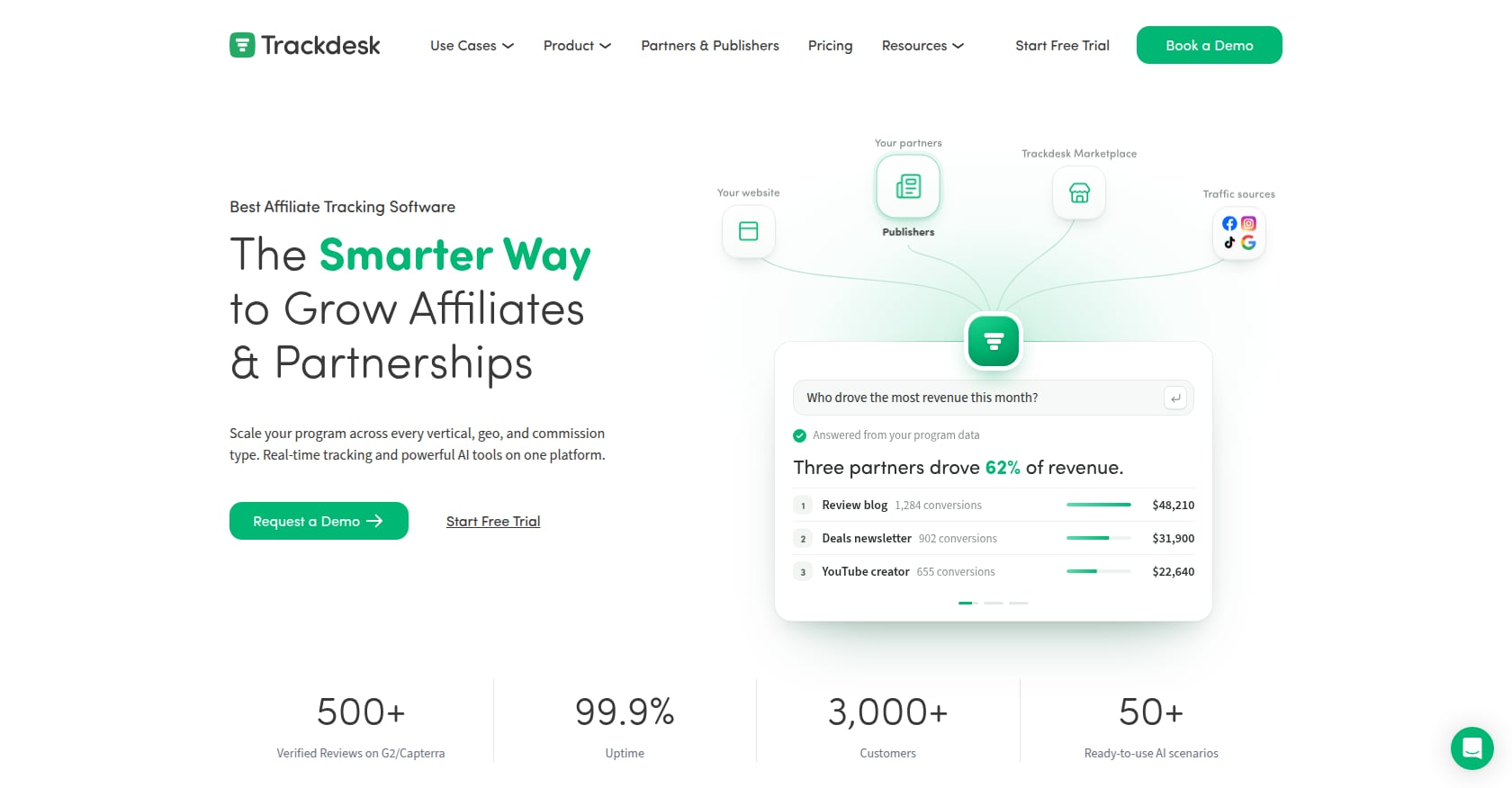
Best for: SaaS startups validating the affiliate channel before committing any budget.
Pricing:
Free: up to $1,000/month in affiliate-driven revenue
Business: $249/month
Enterprise: $499/month
Enterprise PLUS: approximately $1,999/month
Key features:
Genuinely free tier with no time limit, just a revenue gate
Multi-integration support across SaaS billing platforms
G2 rating: 4.7
Tradeoffs:
The jump from free to $249/month is steep with no intermediate tier
Feature set at the free level is limited
Less established than competitors with longer track records
Trackdesk offers a free trial rather than a permanent free tier, with paid plans starting around $249 to $299 per month depending on billing cycle and tier (such as Launch, Scale, and Enterprise plans with uncapped tracking and higher-tier marketplace or support options). Note: If you specifically want to keep a reference to an earlier or promotional revenue-gated free tier, label it clearly as historical or unverified on current pricing pages.
4. Rewardful
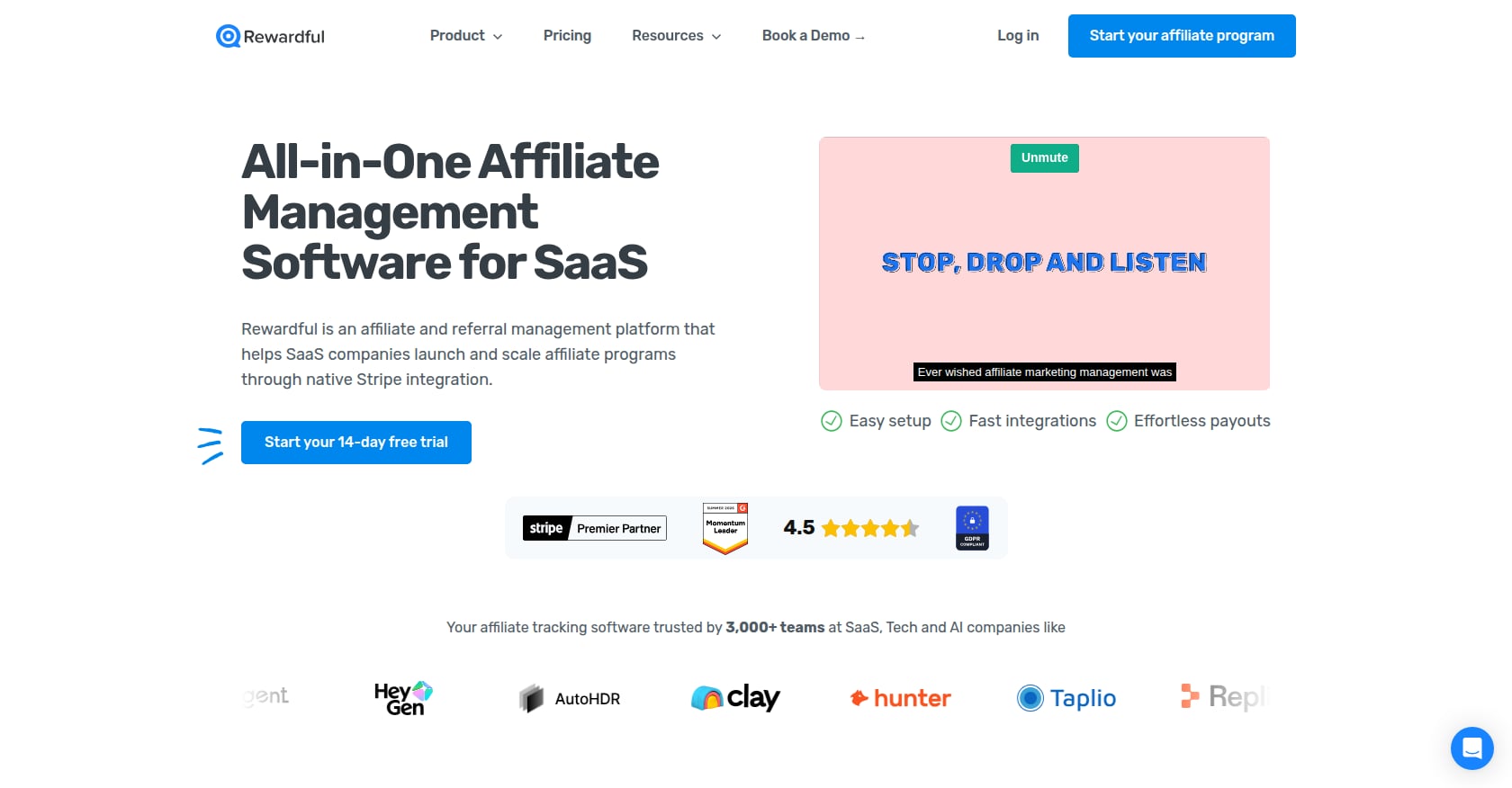
Best for: SaaS companies on Stripe wanting fast recurring-commission setup with predictable pricing.
Pricing:
Starter: $49/month (caps at $7,500/month in affiliate revenue)
Growth: $99/month (caps at $15,000/month in affiliate revenue)
Enterprise: $149+/month
Key features:
Native Stripe integration, live in minutes
Recurring commission support for subscription businesses
No transaction fees on standard plans (3% only if using managed payouts)
Tradeoffs:
Revenue caps force upgrades as your program grows
Analytics feel limited at scale, according to practitioners
Less suited for ecommerce or non-Stripe businesses
Practitioners on Reddit praise Rewardful’s Stripe setup ease and competitive pricing relative to Impact.com or PartnerStack, but flag that the analytics features feel basic once you’re managing dozens of active affiliates. The revenue cap structure means your costs are predictable right up until they aren’t.
5. FirstPromoter
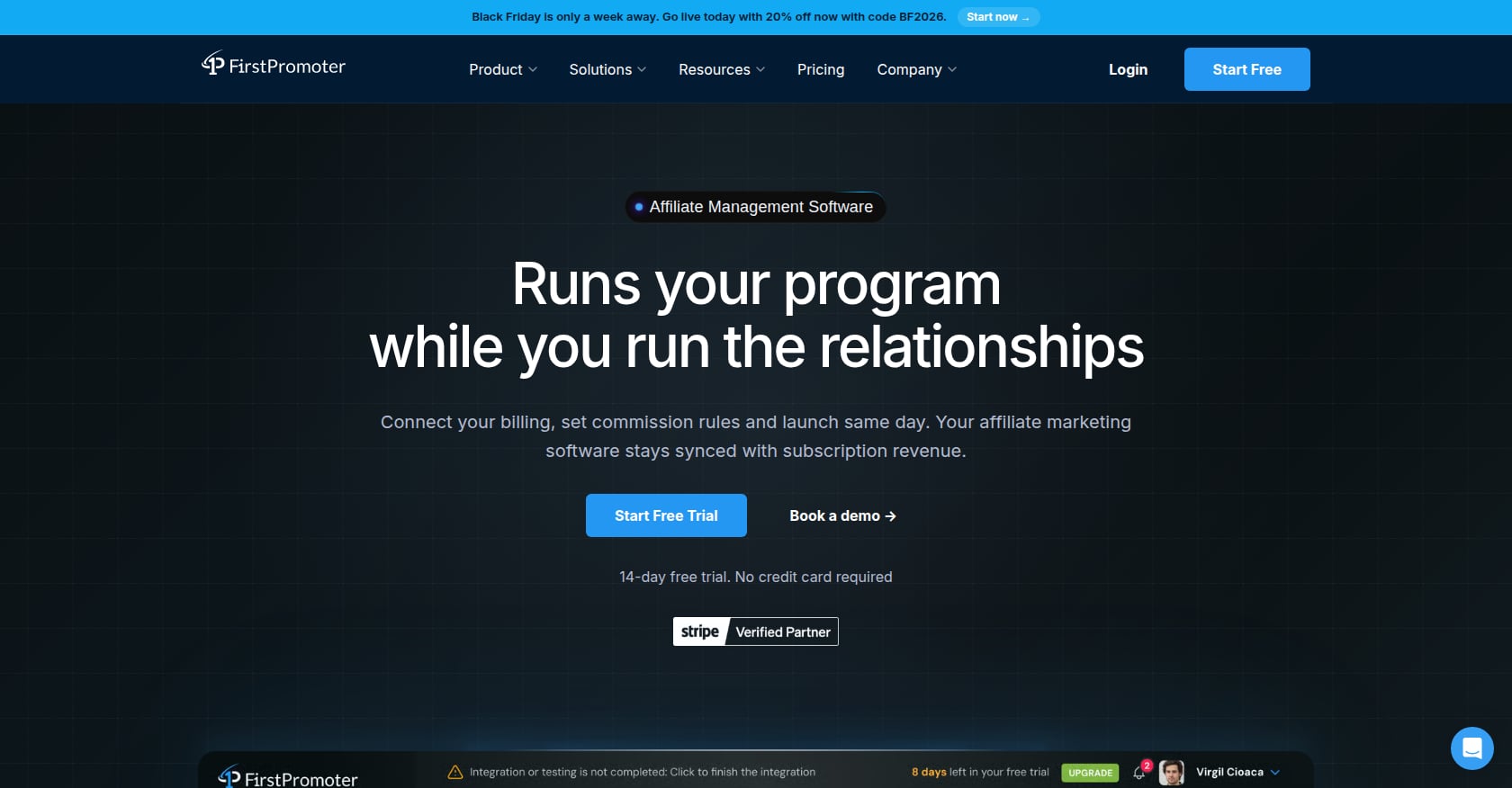
Best for: SaaS companies wanting combined affiliate and customer-referral tracking in one tool.
Pricing:
Starter: $49/month (up to $5,000/month in affiliate-referred revenue)
Higher tiers at $99+/month unlock API access and higher caps
Key features:
Dual affiliate + referral program management
Clean dashboard for SaaS metrics
G2 rating: 4.8
Tradeoffs:
The $5,000/month revenue cap on Starter is tight for growing programs
API access locked behind higher tiers
Less suited for ecommerce use cases
The $5,000 revenue cap deserves attention. If your affiliate program is working, you’ll hit that ceiling faster than you expect, and the forced upgrade changes your cost math.
6. Tolt

Best for: Early-stage SaaS wanting lightweight affiliate tracking without complexity.
Pricing:
$69/month basic tier
Caps at $10,000/month in affiliate revenue
2% fee on automated payouts
Key features:
Simple setup designed for small SaaS teams
Automated payout processing
Clean, minimal interface
Tradeoffs:
The 2% payout fee adds up as commission volume grows
Limited feature depth compared to Tapfiliate or Post Affiliate Pro
Revenue cap forces an upgrade conversation at $10K/month
Tolt sits in a sweet spot for founders who need something running quickly. But the combination of a revenue cap and a payout fee means your true cost grows from two directions simultaneously.
7. Tapfiliate
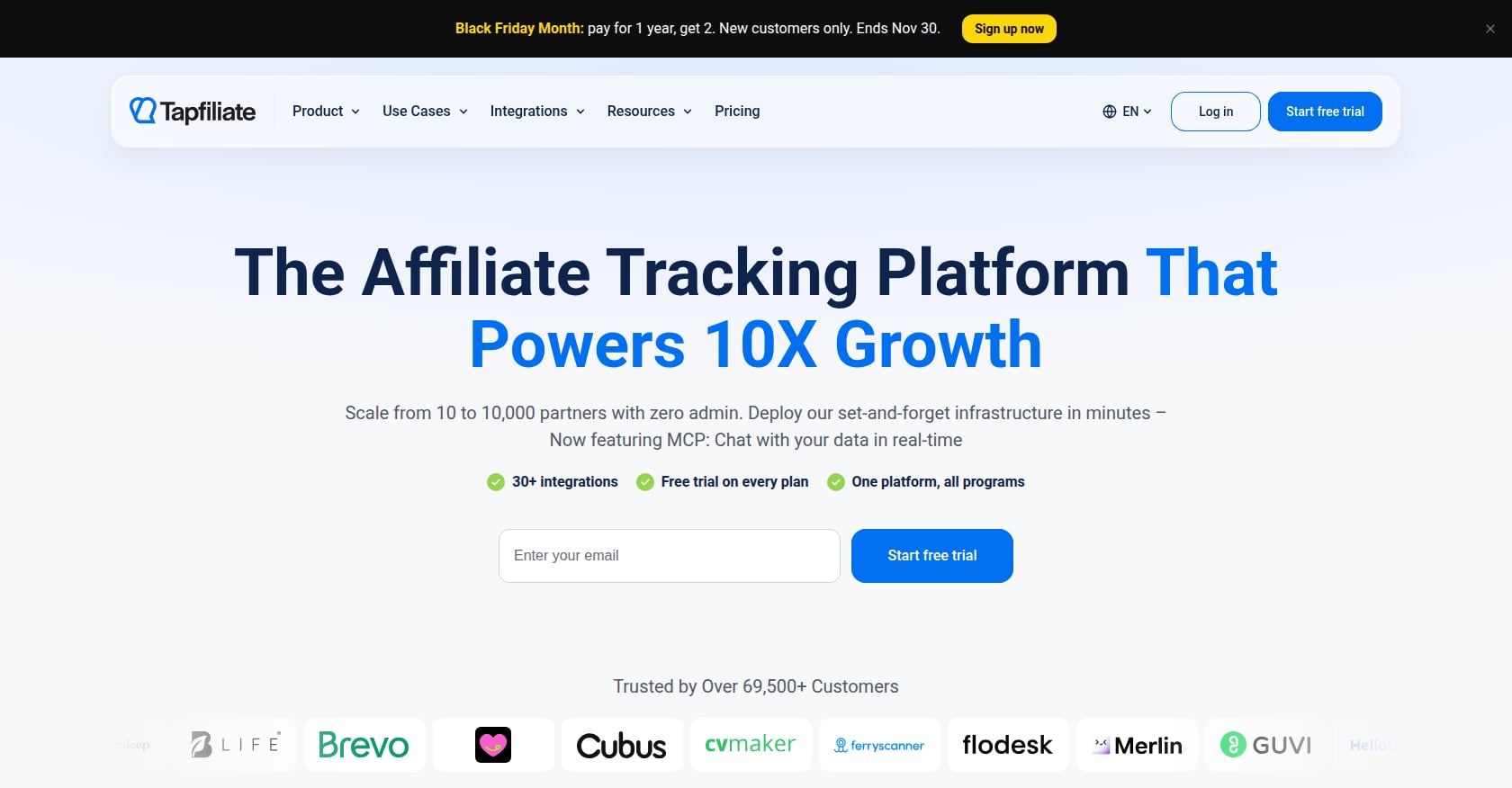
Best for: Small to mid-sized SaaS and ecommerce brands that need clean tracking with reasonable pricing.
Pricing:
Launch: $89/month
Includes one program, 50 affiliates, 5,000 clicks, and 500 conversions per month
Overage fees: $1.50 per extra 1,000 clicks and $15 per extra 1,000 conversions
Key features:
Easy Stripe and payment platform integration
Clean interface praised on Capterra reviews
Support for multiple commission structures
Tradeoffs:
50-affiliate and 500-conversion limits on the base plan are restrictive for growing programs
Overage fees can surprise you if traffic spikes
Users on Capterra request better built-in community features
The overage pricing deserves a close look. If you run a promotion that drives a traffic spike, you could see your bill jump without warning.
For ecommerce brands specifically, our guide on ecommerce affiliate marketing strategies covers how to match platform choice with your broader channel strategy.
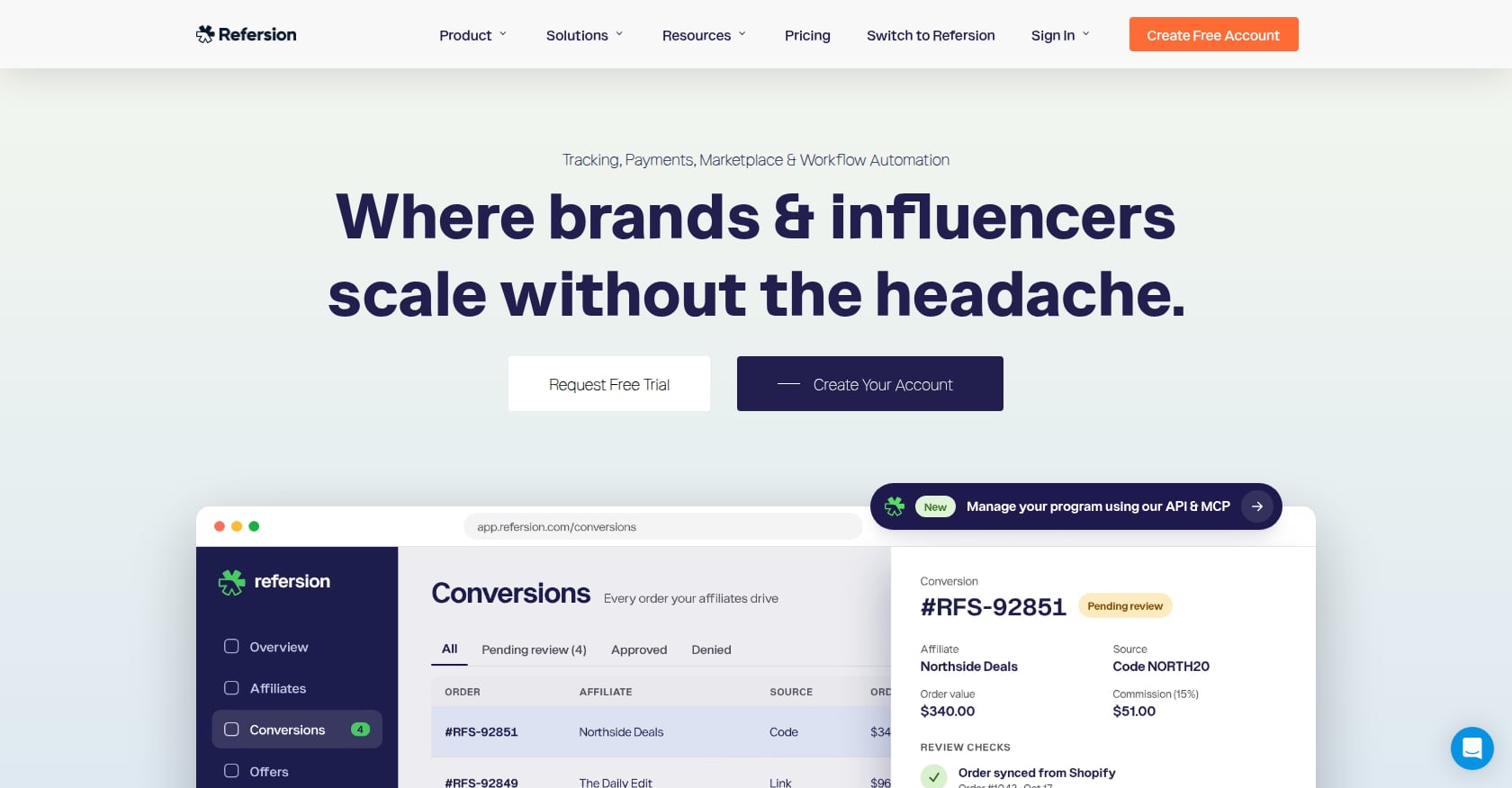
8. Refersion
Best for: Shopify and WooCommerce brands wanting a built-in affiliate marketplace.
Pricing:
Free: marketplace listing only
Launch: $39/month + 3% of affiliate-driven sales
Growth: $199/month + 2% of affiliate-driven sales
Scale: custom pricing
Key features:
Built-in marketplace for affiliate discovery
Shopify and WooCommerce integrations
Automated commission tracking
Tradeoffs:
Transaction fees (2 to 3%) stack on top of the subscription, making this one of the more expensive mid-market options at scale
The free tier is barely functional beyond listing
Less flexible than self-hosted alternatives for complex setups
The transaction fee is the story here. At $50,000/month in affiliate revenue on the Growth plan, you’re paying $199 plus $1,000 in transaction fees, totaling $1,199 per month. That puts Refersion in enterprise pricing territory without enterprise features.
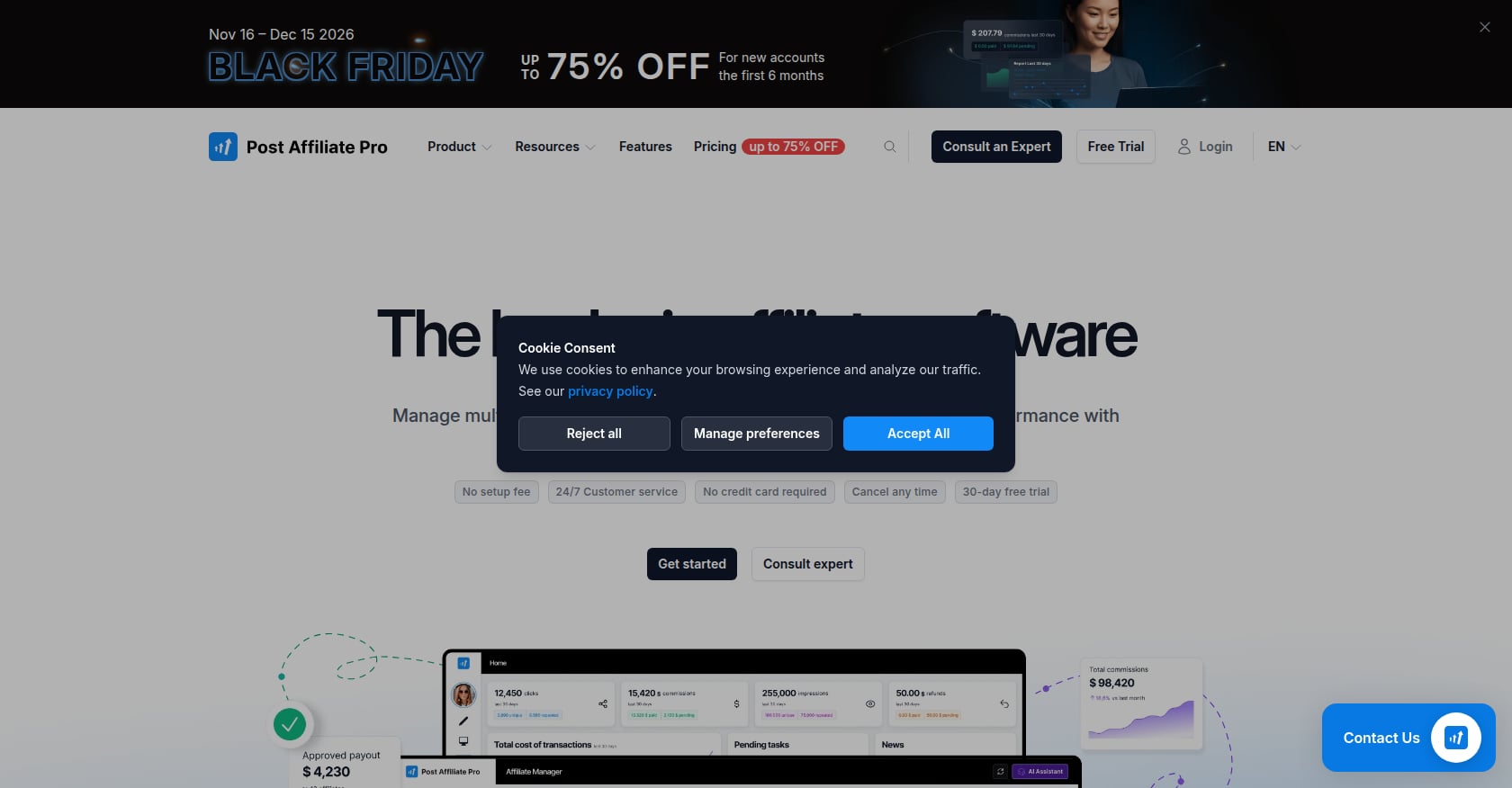
9. Post Affiliate Pro
Best for: Businesses needing customizable, self-hosted tracking with complex commission structures.
Pricing (billed annually):
Pro: $129/month
Ultimate: $249/month
Network: $599/month
Key features:
Highly customizable commission structures (multi-tier, action-based, recurring)
Self-hosted option for full data control
686 reviews on Capterra with strong ratings
G2 rating: 4.5
Tradeoffs:
The interface feels dated compared to newer competitors
Setup requires more technical involvement than plug-and-play tools
The jump to Network tier ($599/month) is a big commitment
Post Affiliate Pro is one of the few platforms where you aren’t paying percentage-based fees on top of your subscription. For brands with high affiliate revenue volume, that flat pricing structure can save thousands per month.
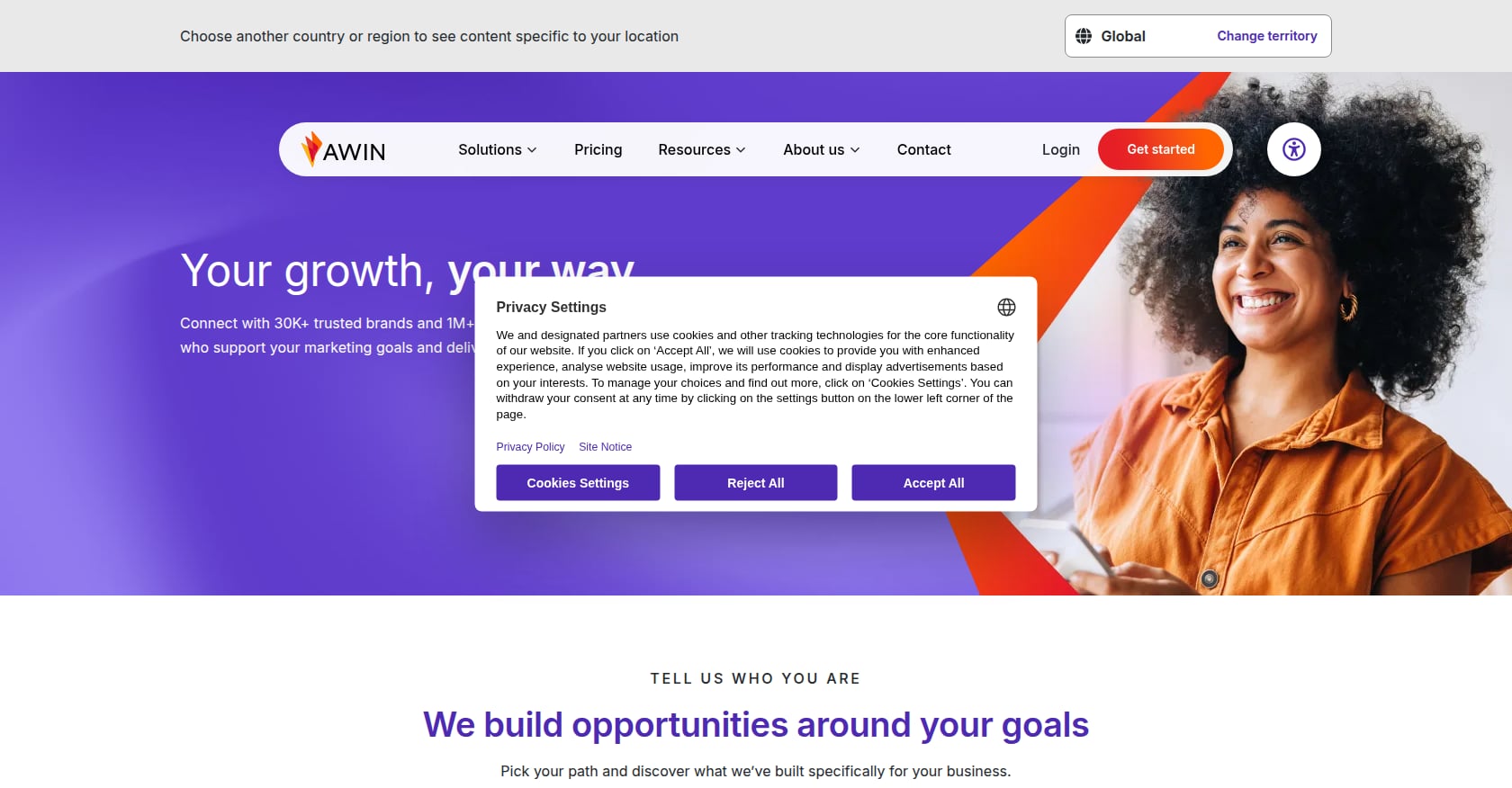
10. Awin
Best for: Consumer brands that want access to a large established publisher network rather than building from scratch.
Pricing:
Awin Access: $99/month + 3.5% of each tracked transaction (3-month minimum)
Accelerate: $199/month + 2.5% of each tracked transaction
Awin completed migrating active customers and shut down the standalone ShareASale platform in late 2025 (with remaining balances settled around its October 2025 closure and shareasale.com redirecting to Awin), giving merchants direct access to Awin's publisher network and tracking stack.
Key features:
Massive existing publisher network
Built-in recruitment and discovery
Cross-border tracking capabilities
Tradeoffs:
Network-fee economics add 20 to 30% to merchant payouts, often making Awin more expensive than SaaS pricing at scale
Less control over the technology stack compared to self-hosted solutions
Three-month minimum commitment on the Access tier
The key distinction is that Awin is a network, not just software. You’re paying for access to publishers. For a detailed breakdown of when that tradeoff makes sense, see our agency vs. network guide.
11. Impact.com

Best for: Enterprise brands running multi-partner programs across affiliates, influencers, and strategic partners.
Pricing (as of October 2026):
Starter: from $30/month
Essentials: from $500/month
Pro: from $2,500/month
Enterprise: custom quote
On top of plan fees, Impact.com charges a 2.5% transaction fee on partner-driven transactions plus a one-time setup fee.
Key features:
Full partnership management across affiliate, influencer, and B2B
Advanced tracking and attribution
Partner Cloud marketplace with broad publisher access
Tradeoffs:
The $500/month Essentials entry point is a real barrier for smaller brands
Transaction fees compound quickly at scale
The platform can feel overwhelming for teams managing simple programs
Here’s the math that matters: Impact.com Starter with $20,000 in monthly partner revenue costs $30 + (2.5% x $20,000) = $530/month. At $50,000 in monthly partner revenue, you’re looking at $1,280 on Starter alone.
Industry practitioners suggest that for brands tracking modern affiliate KPIs, the per-attributed-sale cost needs to justify the $25,000+ annual floor, generally requiring $500,000+ in annual affiliate spend to amortize the platform fee against the value.
If you’re a solopreneur or a startup with a tight budget, Impact.com will feel like too much platform for your current needs.
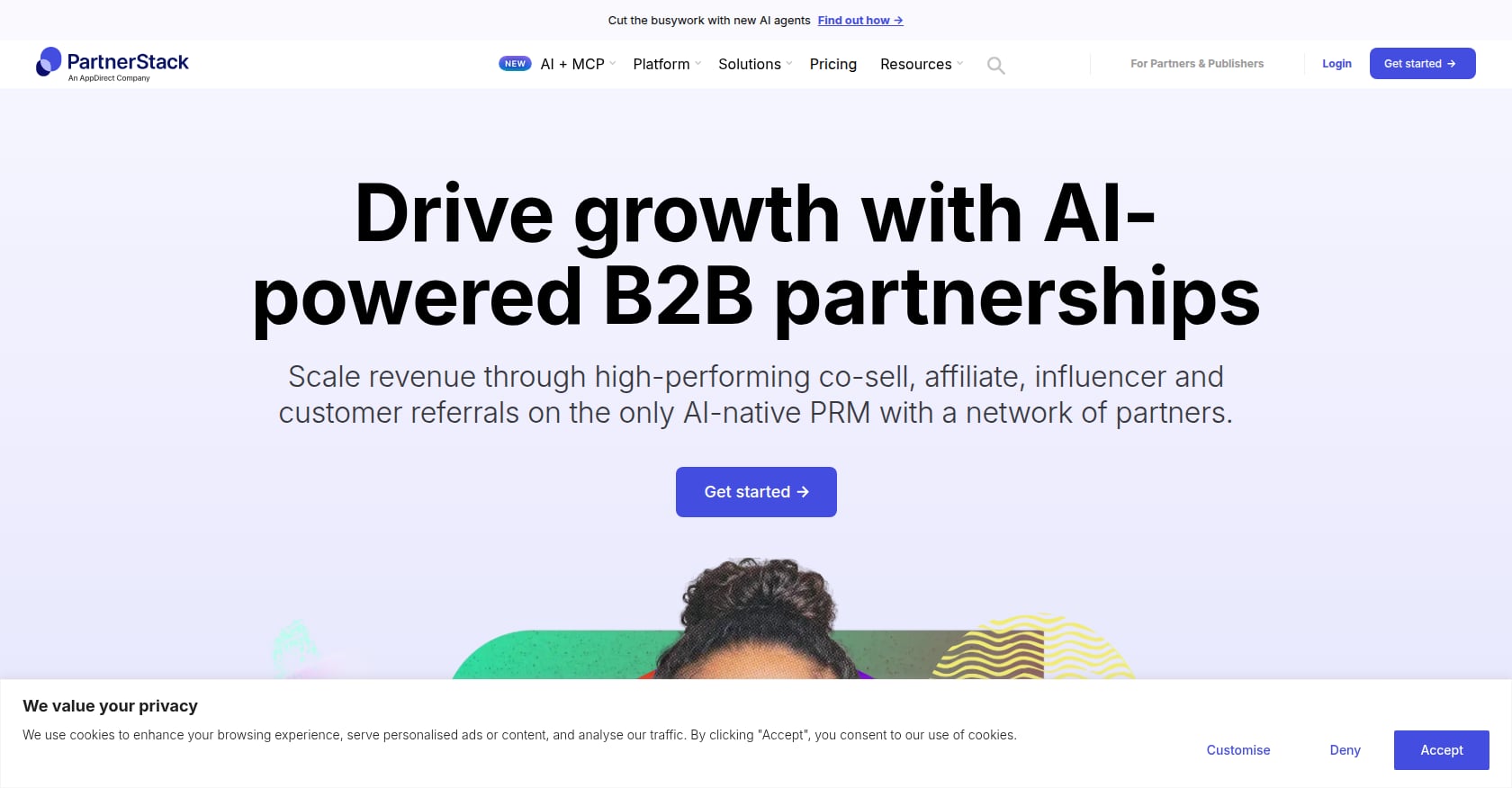
12. PartnerStack
Best for: B2B SaaS companies building ecosystem-driven partner programs.
Pricing:
PartnerStack does not publish pricing on its website. All plans require a demo and custom quote. Based on industry reports and user discussions, expect a platform fee starting around $1,000/month for the base Launch tier (billed annually), plus a percentage of partner-driven revenue, typically 3 to 15%.
At scale, a company paying $100,000/month in partner commissions could owe $3,000 to $15,000 per month in PartnerStack fees alone.
Key features:
Purpose-built for B2B SaaS partner ecosystems
Marketplace with existing B2B publishers
Partner lifecycle management tools
Tradeoffs:
The minimum viable budget is roughly $15,000 to $20,000 per year before commissions
Contracts typically run 12 to 24 months
The platform removed all public pricing in 2020, making cost planning difficult without a sales conversation
A Reddit user questioned whether the $12,000/year entry cost delivers clear ROI when recruitment still relies on your own team’s effort. That’s a fair concern. PartnerStack provides the infrastructure, but filling the pipeline with quality partners requires dedicated effort on top of the platform fee.
Need help navigating platform selection? Hamster Garage holds Gold Partner status with PartnerStack and Platinum Managing Partner status with Impact. Get a consultation to find the right fit for your program.
Enterprise Platforms Without Published Pricing
Two additional platforms deserve mention, though both require custom quotes.
Everflow starts at approximately $750/month and requires a 6-month commitment. As one practitioner put it in a community discussion: “I love Everflow, but I’m not gonna recommend a $750/month platform to someone doing $2K/month in affiliate revenue.” Everflow makes sense for mid-market to enterprise brands with $250,000+ in monthly affiliate revenue.
TUNE's Scale plan is commonly cited around $1,500 per month (billed annually, with conversion allowances and overages depending on plan terms), while custom enterprise agreements vary based on event volume, modules, and contract length. Reserve 12-to-24-month contract terms specifically for enterprise partner agreements like PartnerStack rather than attributing them across all enterprise tools.
Hidden Costs Checklist: The Real Price of Affiliate Software
The subscription price is typically 30 to 50% of your actual infrastructure cost. Here’s what most pricing pages don’t tell you.
Transaction fees. Impact.com charges 2.5% on partner-driven transactions. Refersion adds 2 to 3% of affiliate-driven sales on top of its subscription. UpPromote takes 1 to 2%. These percentages sound small until you model them against $50,000 in monthly affiliate revenue.
Revenue caps that force upgrades. Rewardful caps at $7,500/month on Starter. FirstPromoter caps at $5,000/month. Tolt caps at $10,000/month. These caps function as invisible pricing tiers, pushing you to more expensive plans exactly when your program starts generating meaningful revenue.
Implementation and setup fees. Enterprise platforms commonly charge $5,000 to $50,000 for implementation. Professional services (custom integrations, migration, training) can add $2,000 to $10,000 per month. These costs rarely appear on the pricing page.
Minimum commitments. Everflow requires 6 months. TUNE’s Scale plan is annual. PartnerStack typically uses 12 to 24-month contracts. Early termination penalties exist. If you’re unsure about a platform, a long commitment amplifies your risk.
Add-on fees. Fraud detection, white-labeling, advanced reporting, and API access are often gated behind higher tiers or sold as add-ons. Ask about these before signing.
Overage charges. Tapfiliate charges $1.50 per extra 1,000 clicks and $15 per extra 1,000 conversions. TUNE charges for conversions beyond plan limits. A successful campaign can trigger unexpected costs.
For a comprehensive look at affiliate program budgeting, including costs beyond software, we’ve built a full planning guide.
Pricing Differences by Business Model: SaaS, Ecommerce, and Networks
SaaS and Subscription Brands: Often favor flat-rate or revenue-capped tools with native billing integrations (like Stripe) and recurring commission support. Pay close attention to how recurring renewals push monthly attributed revenue past plan caps. Ecommerce and DTC Brands: Frequently face percentage-of-sale or commission fees stacked on top of base plans. Always model your Software Efficiency Ratio across peak sales periods rather than quiet months. Affiliate Networks: Charge for access to established publishers alongside tracking and payout infrastructure. This can speed up partner recruitment, though higher fee layers can increase total acquisition cost at scale.
Cost Modeling: What You Actually Pay at $5K, $20K, and $50K in Monthly Affiliate Revenue
Sticker prices are meaningless without context. Here’s what five representative platforms actually cost at different revenue levels.
At $5,000/month in affiliate revenue
Platform | Monthly Subscription | Variable Fees | Total Monthly Cost |
|---|---|---|---|
Rewardful (Starter) | $49 | $0 | $49 |
Tapfiliate (Launch) | $89 | ~$0 (within limits) | $89 |
UpPromote (Growth) | $29.99 | $100 (2%) | $130 |
Impact.com (Starter) | $30 | $125 (2.5%) | $155 |
Awin (Access) | $99 | $175 (3.5%) | $274 |
At $20,000/month in affiliate revenue
Platform | Monthly Subscription | Variable Fees | Total Monthly Cost |
|---|---|---|---|
Rewardful (Enterprise) | $149+ | $0 | $149+ |
UpPromote (Professional) | $89.99 | $300 (1.5%) | $390 |
Impact.com (Starter) | $30 | $500 (2.5%) | $530 |
Awin (Accelerate) | $199 | $500 (2.5%) | $699 |
PartnerStack (est.) | $1,000 | $600–$3,000 (3–15%) | $1,600–$4,000 |
At $50,000/month in affiliate revenue
Platform | Monthly Subscription | Variable Fees | Total Monthly Cost |
|---|---|---|---|
Post Affiliate Pro (Ultimate) | $249 | $0 | $249 |
Rewardful (Enterprise) | $149+ | $0 | $149+ |
Impact.com (Essentials) | $500 | $1,250 (2.5%) | $1,750 |
Awin (Accelerate) | $199 | $1,250 (2.5%) | $1,449 |
PartnerStack (est.) | $1,000 | $1,500–$7,500 | $2,500–$8,500 |
Note: Figures reflect modeled subscription and variable fee estimates based on published rates and typical commission/transaction percentages; actual bills vary by billing frequency, plan minimums, add-on modules, and custom enterprise terms.
The pattern is clear: flat-subscription platforms like Post Affiliate Pro and Rewardful become dramatically cheaper at higher revenue levels, while percentage-based platforms become more expensive precisely when your program succeeds.
The Software Efficiency Ratio: A Framework for Evaluating Platform Cost
Here’s a simple framework: your platform cost should represent less than 5% of total affiliate-driven revenue. Call this your Software Efficiency Ratio (SER).
SER = (Monthly platform cost / Monthly affiliate revenue) x 100
If your SER is above 5%, the platform is eating too much of your margin. If it’s below 3%, you’re in a healthy range.
Example: If your platform costs $750/month and your partner-driven revenue is $10,000, your SER is 7.5%. That’s too high. Either your revenue needs to grow into the platform, or you need a cheaper tool.
At $50,000/month in affiliate revenue:
Post Affiliate Pro ($249): SER = 0.5% ✓
Impact.com Essentials ($1,750 total): SER = 3.5% ✓
PartnerStack mid-range ($4,000 total): SER = 8% ✗
This framework also helps when evaluating affiliate commission optimization. Your platform cost and commission structure together determine your true program margin.
When Software Alone Isn’t Enough
People on Reddit see $300 to $1,000/month tools and feel like they’re paying for “links and stats.” The threads usually reveal what they’re actually paying for: infrastructure, reliability, and operations. But even the best infrastructure doesn’t recruit publishers, negotiate commissions, audit for fraud, or optimize incrementality.
Software handles tracking and payouts. That’s the floor. Here’s what it doesn’t do:
Partner recruitment. Finding and activating quality affiliates requires outreach, relationship building, and ongoing management.
Commission optimization. Testing elasticity across partner segments to find the payout structure that maximizes ROI.
Compliance monitoring. Catching trademark bidders, coupon poachers, and brand guideline violations.
Incrementality analysis. Determining which partners drive net-new customers versus claiming credit for organic conversions.
The full cost stack for an affiliate program includes software ($30 to $2,500/month), commissions paid to affiliates, and either an in-house team or an agency to run the program. Our analysis of affiliate management services cost breaks down what brands typically invest across each layer.
Brands generating $30,000 or more per month in affiliate revenue typically see higher ROI when they pair software with a specialist agency. The incremental cost of professional management buys execution that software alone cannot replicate.
How Hamster Garage Helps Brands Navigate Platform Selection and Program Management
Hamster Garage is the affiliate marketing agency for ambitious brands that want their partnership channel built, managed, and scaled by operators, not paper-pushers. The team manages global affiliate programs from hubs in Chicago and Lahore, with hands-on execution across Impact.com (Platinum Managing Partner) and PartnerStack (Gold Partner).
What Hamster Garage delivers:
Full affiliate program management, from platform selection through ongoing optimization
Partner recruitment, activation, and lifecycle management
Commission structure design and elasticity testing
Compliance monitoring and fraud prevention
Incrementality measurement and reporting
Who the service is for: Growth-stage and enterprise brands in SaaS, fintech, DTC, retail, and marketplace verticals that want their affiliate channel run professionally.
What the first 90 days look like: Platform architecture decisions, partner pipeline building, commission framework setup, compliance infrastructure, and initial partner activations. See our guide on affiliate program first 90 days for the full playbook.
What metrics are reported: Revenue, conversions, CPA, partner activation rates, incrementality metrics, and program-level KPIs tailored to each brand’s goals.
Proof: What Platform Selection Plus Agency Execution Delivers
Xero came to Hamster Garage with no affiliate infrastructure. The team launched on PartnerStack, then added Impact.com for broader reach. The result: +1,200% paid conversions, +700% signups in 18 months, and CPA reduced approximately 49% to $399. Read the full Xero case study.
VEED needed an affiliate program built from zero in a crowded AI video market. Hamster Garage recruited 1,000+ partners and implemented dynamic commissions. The program went from $0 to $100K MRR with +175% year-over-year revenue growth. See the VEED case study.
A global ride-sharing platform needed to reduce commission costs without killing growth. Commission elasticity testing delivered $4.8 million in annualized savings while growing the program 7% and increasing first-time rides by 6.9%.
The lesson across all three: the platform is table stakes. The strategy, recruitment, and optimization that happen on top of the platform drive the actual results.
Buyer Checklist: 10 Questions Before Signing an Affiliate Software Contract
What is the total monthly cost at my current affiliate revenue level, including all transaction fees?
What revenue cap or usage limit will force me to upgrade, and what does the next tier cost?
Is there an implementation or setup fee? How much?
What is the minimum contract length, and what are the termination penalties?
Does the platform charge separately for fraud detection, white-labeling, or API access?
What integrations are native (Shopify, Stripe, etc.) versus requiring custom development?
Can I export my data and partner relationships if I switch platforms?
What does onboarding and training look like, and is there an additional cost?
What is the platform’s uptime track record and support response time?
At my projected revenue in 12 months, what will my Software Efficiency Ratio be?
Ready to find the right platform for your program? Hamster Garage helps brands select, implement, and manage affiliate platforms to maximize ROI. Talk to the team.
FAQ
How much does affiliate software cost in 2026?
Affiliate tracking software typically ranges from free to $299 per month for small and mid-sized programs, while mid-market and enterprise platforms range from $500 to $5,000+ per month depending on features, volume, and contract terms. Total cost of ownership—including setup, overages, add-ons, and management support—often reaches one to three times the base subscription cost.
What hidden fees do affiliate platforms charge?
The most common hidden costs are transaction fees (2 to 3.5% of affiliate-driven sales), revenue caps that force tier upgrades, implementation fees ($5,000 to $50,000 for enterprise tools), overage charges on clicks or conversions, add-on pricing for fraud detection or white-labeling, and mandatory long-term contracts with early termination penalties.
Is Impact.com worth the price?
For enterprise brands running $500,000+ in annual affiliate spend with multi-partnership programs spanning affiliates, influencers, and strategic partners, Impact.com’s tracking depth and Partner Cloud justify the cost. Below that threshold, lighter tools like Rewardful, Tapfiliate, or Post Affiliate Pro are typically more cost-effective.
What is the cheapest affiliate software?
GoAffPro offers a Free Forever plan with unlimited affiliates. Trackdesk is free up to $1,000/month in affiliate-driven revenue. UpPromote has a free Shopify plan with limited features. Among paid options, UpPromote Growth ($29.99/month) and Rewardful Starter ($49/month) are the most affordable.
Does PartnerStack publish pricing?
No. PartnerStack removed all public pricing in 2020. Based on third-party reports and community discussions, expect a starting cost of approximately $1,000 to $1,500 per month (billed annually) plus a 3 to 15% fee on partner commissions. The minimum viable annual budget is roughly $15,000 to $20,000 before commission payouts.
Should I use affiliate software or hire an agency?
Software handles tracking and payouts, costing $30 to $2,500 per month. An agency handles strategy, partner recruitment, compliance monitoring, and optimization, typically at $3,000 to $15,000 per month in retainer. Most brands generating $30,000+ monthly in affiliate revenue benefit from pairing software with a specialist agency to maximize program ROI.
What is total cost of ownership for affiliate software?
Total cost of ownership includes software subscription, implementation, training, integrations, customization, professional services, and support upgrades. Across a 3-year period, TCO for affiliate programs ranges from $40,000 to $500,000+. The subscription price alone typically represents 30 to 50% of actual infrastructure cost.
What is the Software Efficiency Ratio?
The Software Efficiency Ratio (SER) measures your platform cost as a percentage of affiliate-driven revenue. Calculate it by dividing monthly platform cost by monthly affiliate revenue and multiplying by 100. A healthy SER is below 5%. If your platform cost represents more than 5% of your affiliate revenue, you’re either on the wrong tier or the wrong platform.
Latest Articles