.svg)
Synthetiq Modernizes Company Building


.svg)
Introduction
I met Ujjwal years ago, when he was the COO of BenchPrep. I was interviewing for a role that would report to both him and the CEO. We got along really well, but I ultimately took a role at Airbnb because I wanted to see how a big tech company operates.
Fast forward 8 years, I run an affiliate marketing agency that advises some of the world’s most ambitious brands like Uber, MasterClass, Tesla, Slack and Coinbase. We’re about 30 employees, mostly based out of our Chicago and Lahore offices, and generally a very young team.
Affiliate marketing is basically partnerships. We’re a performance marketing channel, so we’re held to ROI goals, but the core atomic function is identifying, optimizing, and scaling partners that can drive new customers and sales for our clients.
As you can imagine, this work entails a lot of emails, spreadsheets, and meetings.
Unlike the programmatic nature of other marketing channels like Search (Google) and Social (Meta), our work entails emailing partners – sometimes hundreds of them – to get them to talk about, promote and endorse our clients to their audiences. In a given week, we’re reaching out to and partnering with cashback sites, loyalty platforms, mainstream publishers, influencers, affinity platforms, online communities, other brands, blogs, and more. We probably sent 1000s of emails a week across our team.
We also own an app, Swipehouse, which connects brands and creators for collaborations – we do all of our influencer marketing work through the app.
There is a lot of room to drive productivity increases and operational efficiencies for an affiliate marketing agency. But, when Ujjwal reached out on LinkedIn years later, saying he had been working on an AI platform, I was skeptical.
I had others reach out and show me demos of platforms, but every platform, especially SaaS platforms that are trying to solve specific problems, have their pros and cons. At the end of the day, I’d look at it and think, I can build this in Claude myself, if only I had time. But, I took the call out of respect for Ujjwal.
A few months later, I wrote my first angel investment check. I’ve only ever heard of stories when a user of a product becomes an investor and never thought I’d be the one writing my first check.
Synthetiq can be defined in a variety of ways, but what sticks out for me as a leader of a marketing agency is the ability to create apps in natural language that have a clean interface by default, are deployable across the company, and ensure data stays local. To that end, here are a few of the apps we’ve been able to build in Synthetiq that would be incredibly difficult and require engineering resources to build otherwise.
Affiliate Program Analyzer
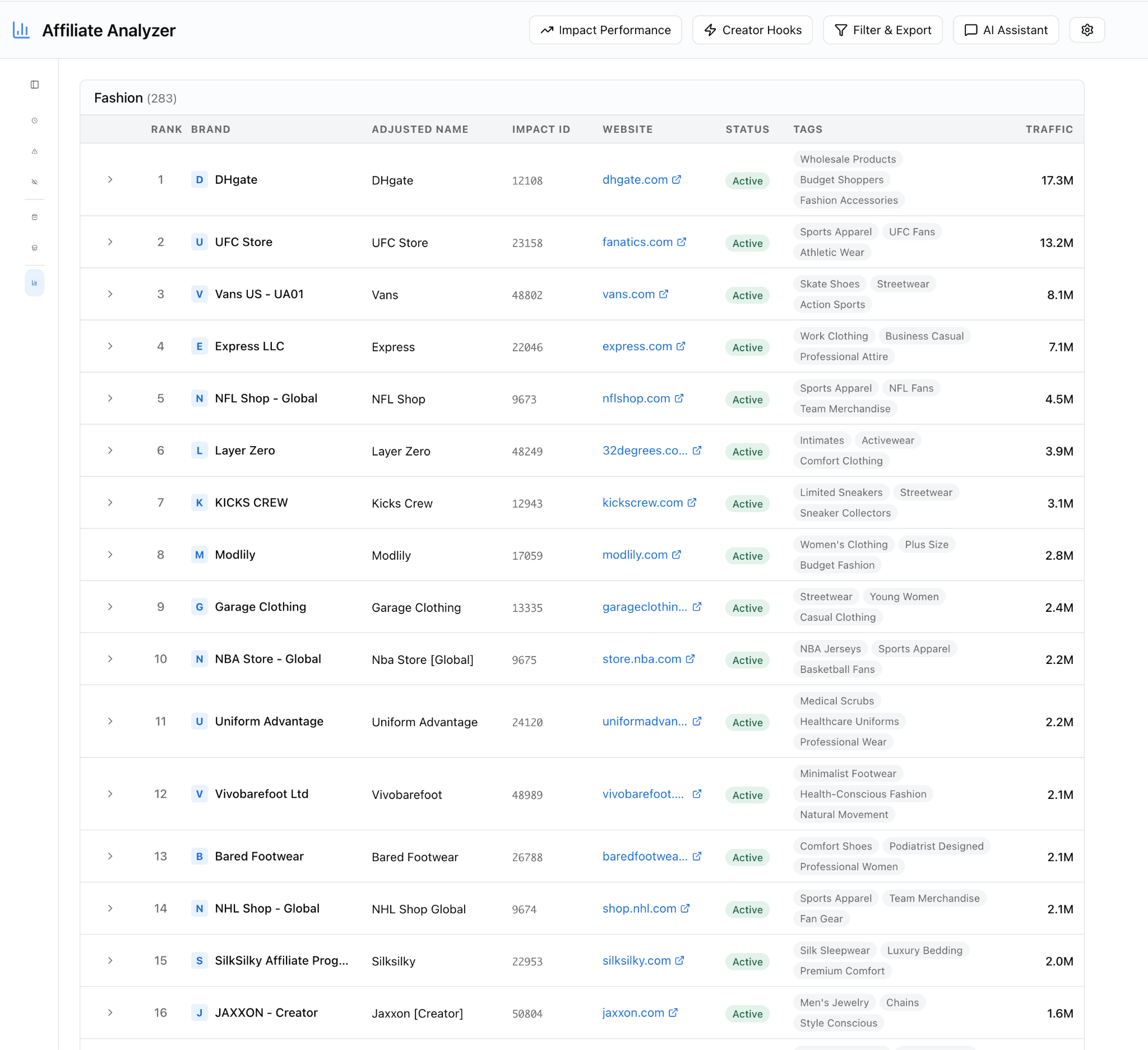
For Swipehouse, we work with over 2000 brands that are in our marketplace that creators can seamlessly get their affiliate link and promote on their socials. For each brand, we need to generate descriptions, rank based on site traffic, generate new viral hook ideas, categorize into a defined number segments for filtering. Instead of taking up engineering resources, as a non-technical founder, I was able to go into our partner platform, pull a list of all the brands, then create a workflow in Synthetiq that crawls each site using the SerperAPI, gets traffic data using the Ahrefs API, then uses Claude to generate descriptions for brand and assign it into our categories (e.g. Financial Services, Pets, Home, etc.).
We separately created a different Synthetiq app that allowed us to input Youtube video, extract the transcript and then extract insights and numbers from the transcript. We fed this app 70+ 1-hour long YouTube videos that we used to create an intelligence layer of 50 variations of hooks that we could apply to each brand to give creators sample viral content ideas to get started.
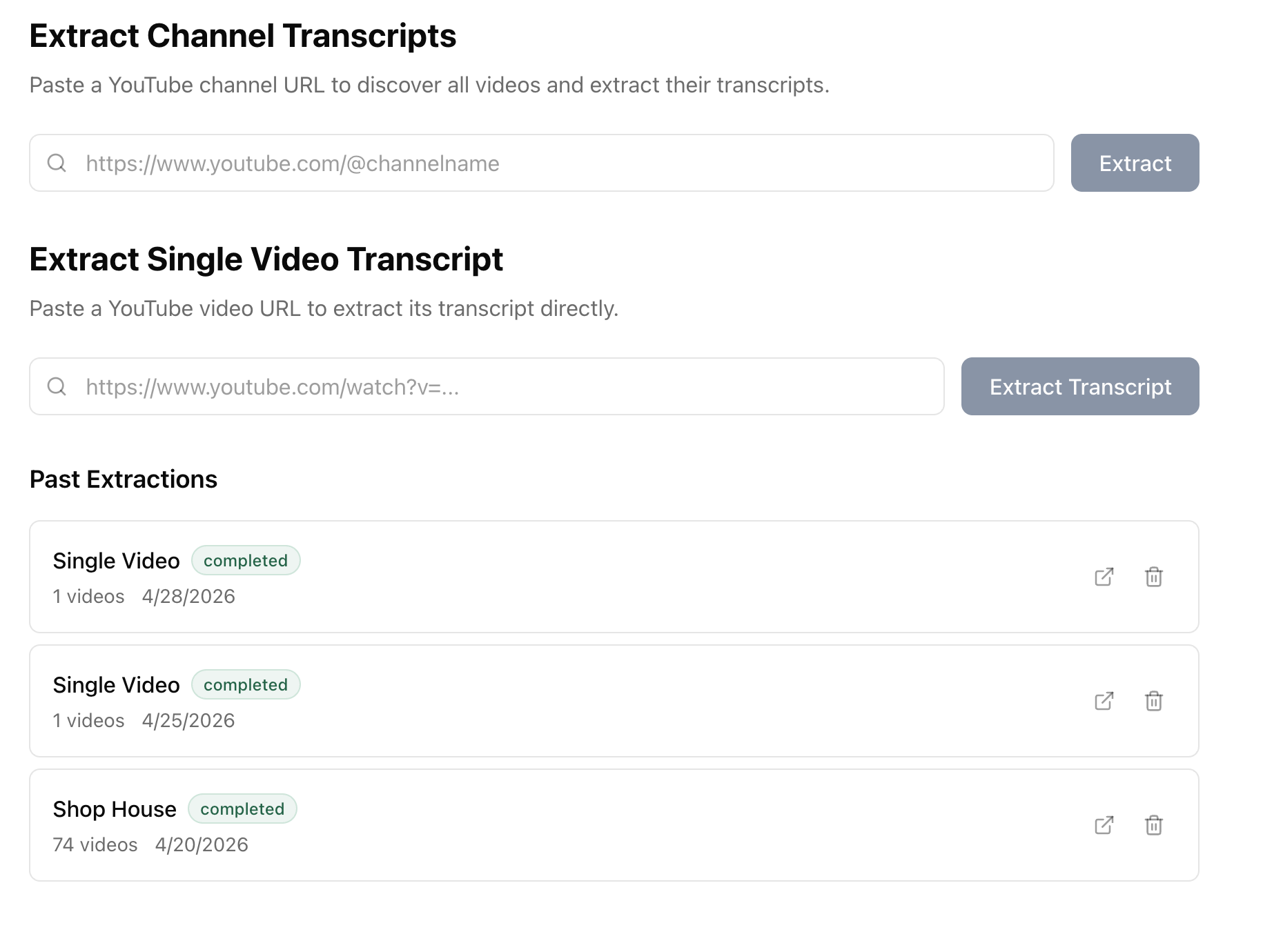
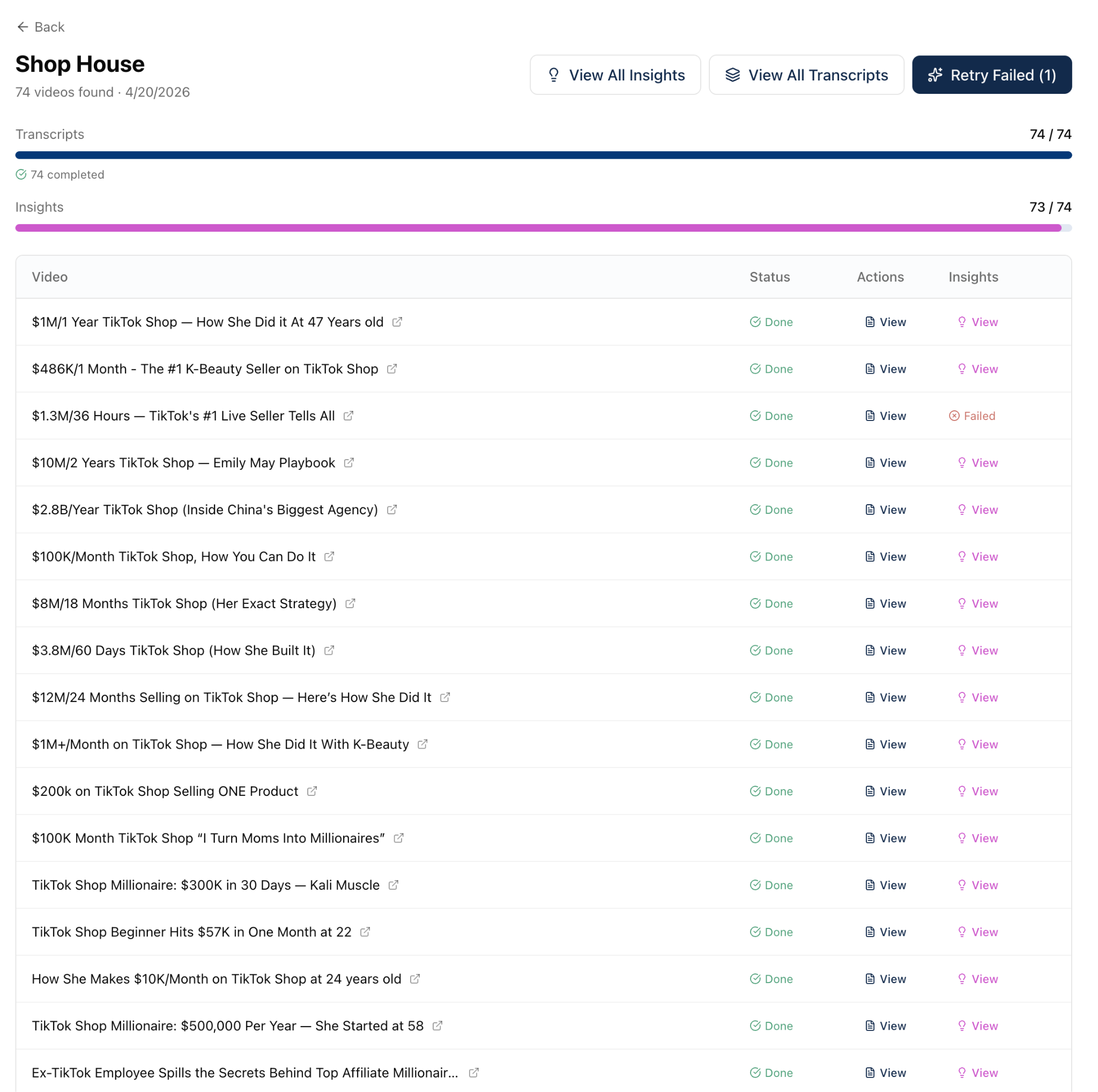
We run this flow and update it for any new brands that join on a regular basis and then provide the end file to our engineering team to upload into our backend.
Retention Platform
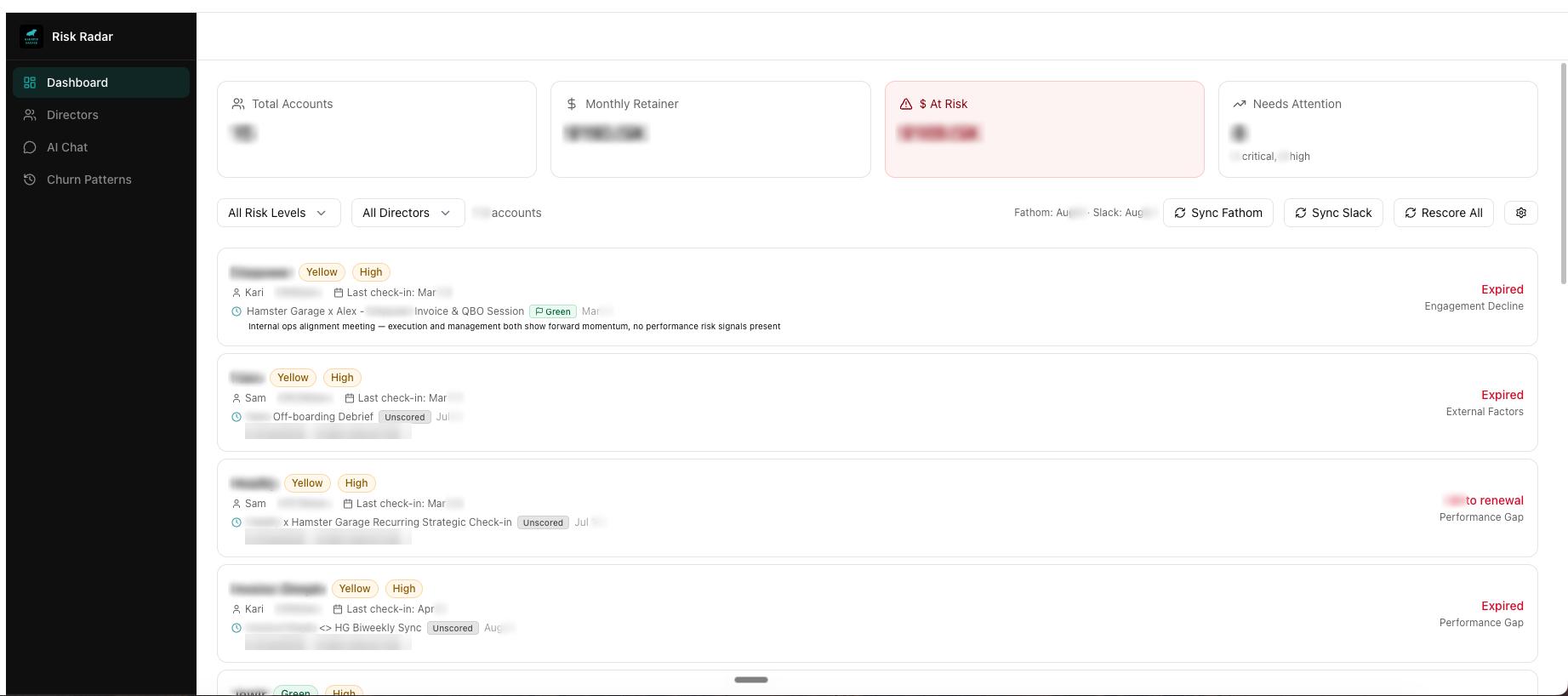
As a services business, one of the things we need to always keep a close eye on is how client calls are going and which accounts are at risk. As we’ve grown to 30 employees and a similar number of clients, there are hundreds of calls and Slack messages across an equivalent number of channels.
Our team built a tool that is able to ingest all of our call recordings via the Fathom API, a notetaker we use on all of our calls. We also ingest Slack messages from each channel, which we have one set up per client. For each client, the app gives a score of how likely the account is to be at risk, and what those key risk areas are.
This becomes a centralizing dashboard for us as the founders and our Director of Client Success, who is primarily responsible for client retention.
Swipehouse Creator Reply System
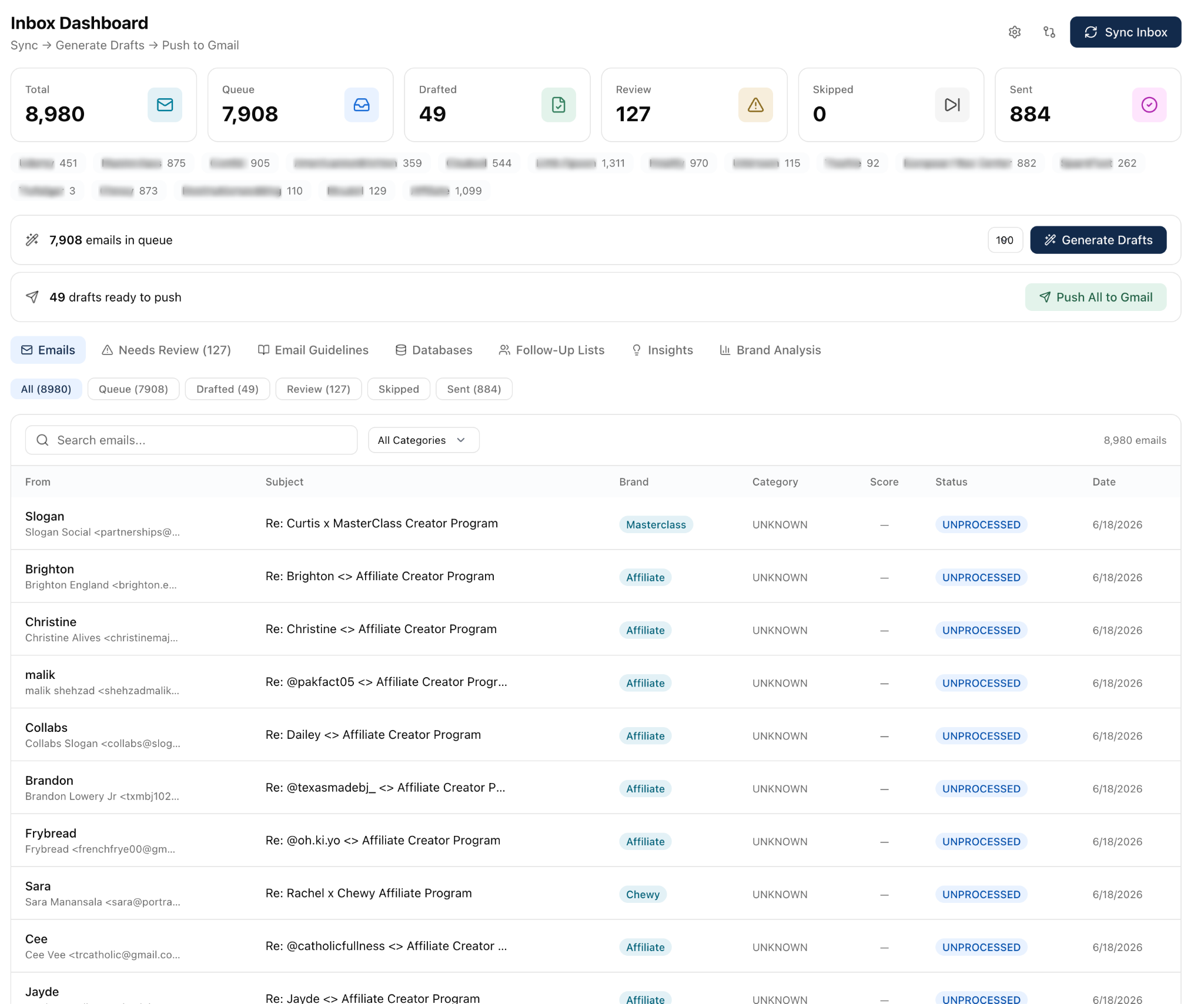
We work with an agency that sends out emails to hundreds of thousands of creators each month to drive creator acquisition for Swipehouse. The agency’s job is to identify creators based on our criteria, email them, and handle deliverability across such a large amount of emails being sent.
If a creator replies, the reply gets forwarded to our team, and we are responsible for replying.
The emails being sent cover app bugs, clarifying questions, geographic constraint questions, and brand specific questions. Our team built an app that is connected to the Gmail API, is able to pull in all the emails in that inbox, identify the sender, identify their question, and generate a draft reply based on a database of context. The replies are varied based on the brand, based on flagged bugs, based on the countries the app is live in, and a general FAQ about the app.
Without Synthetiq, we would have to manually reply to 10,000+ creators.
Hamster Garage Partner Hub
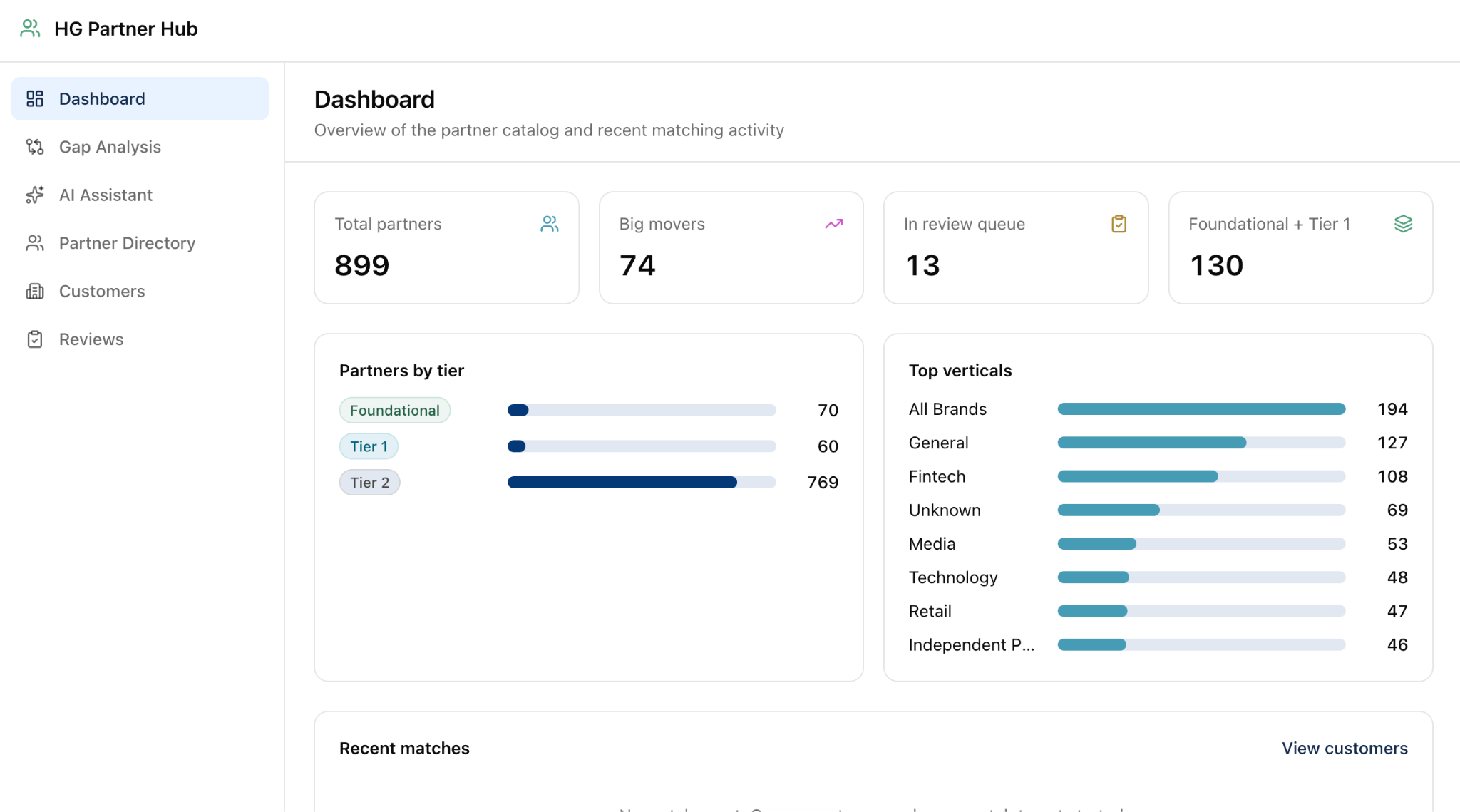
At Hamster Garage, our competitive edge is rooted in the deep relationships we’ve cultivated with hundreds of partners, ranging from loyalty platforms and cashback sites to major publishers and influencers. For the longest time, this institutional knowledge was scattered across disparate spreadsheets or locked away in the minds of our most senior partnership leads.
The challenge arises whenever we audit a client or bring a new brand into the fold: identifying which high-impact partners they are missing. Historically, this manual gap analysis would drain hours of productivity, and the depth of the insights was highly dependent on the individual account manager’s tenure.
To solve this, our team developed a Synthetiq app that transforms our top 200 partners from static spreadsheet rows into dynamic records, categorized by niche and contact data. This allows anyone on the team to source a partner in seconds. Crucially, an account manager can now ingest a client’s current roster, and the app instantly identifies the "gaps," outputting a prioritized recruitment list ready for outreach.
We are currently iterating on this by integrating traffic metrics to quantify the scale of these opportunities and connecting the Impact Radius API. This will allow us to cross-reference live program statuses automatically, ensuring we never reach out to a partner that is already active.
By productizing this expertise, a new hire in their first week can now perform partner discovery with the same precision and rigor as a five-year veteran.
Concluding Thoughts
We’re still in the early stages of rolling out Synthetiq. The challenge of further roll out is entirely non-technical. It’s about thoughtful roll out in a way that preserves consistency across our accounts. While I would not trust 30 of my colleagues that are not technical to become power users of Claude, Synthetiq's core thesis is incredibly well suited for agencies in particular.
Given our clients are often large enterprises with strict security policies, being able to have our data live locally on our computer absolves us of many of these challenges. Similarly, Synthetiq creates an app for every use case and workflow, which means that there is always a human-centered interface for every app. We can connect any API effectively by simply typing in natural language, and we can now even deploy apps, which allows us to build one workflow and share it across different account teams.
All of these reasons make the app a much better fit for our agency than giving everyone unlimited, uncontrolled access on Claude or ChatGPT.
Latest Articles

.svg)



















































.png)


.png)
.png)
.png)

.png)
.png)
.png)


.avif)

.svg)
