.svg)
Affiliate Agency vs Affiliate Network: 2026 Comparison


.svg)
TLDR & Key Takeaways
An affiliate network (or platform) is the technical infrastructure and marketplace that provides tracking links, reporting dashboards, publisher directories, and commission payouts.
An affiliate agency (or OPM) is the strategic management team responsible for program growth—handling partner recruitment, commission structuring, campaign activation, compliance enforcement, and incrementality tracking.
In short: The network provides the system; the agency runs the channel.
The Common Mistake: Joining a network without an active management strategy leaves your program stagnant. Most scaled brands require both infrastructure and execution to build an incremental revenue channel.
The Direct Answer
An affiliate network is the infrastructure and marketplace that connects advertisers with publishers and handles tracking, reporting, contracts, and payments. An affiliate agency is the team that runs the program: recruiting partners, shaping commission strategy, activating publishers, monitoring compliance, optimizing performance, and reporting on incrementality. A network gives you the infrastructure. An agency gives you execution.
Affiliate Agency vs Affiliate Network at a Glance
Category | Affiliate Network | Affiliate Agency |
|---|---|---|
Primary Role | Technology platform | Strategic management |
Tracking | ✓ | Uses the network's tracking |
Publisher Marketplace | ✓ | Uses marketplace + recruits externally |
Recruitment | Limited | Active outreach |
Commission Strategy | Limited | Full ownership |
Compliance | Basic tools | Active monitoring |
Reporting | Standard dashboards | Strategic analysis |
Optimization | Limited | Continuous optimization |
Best For | Brands with experienced internal teams | Brands needing growth and execution |
Replaces the Other? | No | No |
The Performance Marketing Association defines an affiliate network as an intermediary offering tracking, reporting, payment processing, and access to affiliates. It defines an affiliate management agency (also called an OPM, or outsourced program manager) as a firm that manages programs on behalf of advertisers, handling recruitment, activation, management, term negotiation, creative, and promotions. Source: PMA Glossary
In one sentence: a network gives you the system; an agency runs the channel.
If your brand is weighing this decision right now, Hamster Garage manages affiliate programs across recruitment, platform operations, commission strategy, compliance, and performance optimization.
Who This Article Is For
This guide is written for brand-side growth leaders, marketing directors, founders, affiliate managers, and ecommerce or SaaS operators who are asking practical questions:
Do I need an affiliate agency, an affiliate network, or both?
Is a network enough to run my program?
If I join a platform like Awin, CJ, or Impact, will publishers just show up?
What does an agency do that a network does not?
Am I paying twice if I use both?
The answers matter because affiliate marketing is no longer a side channel. EMARKETER reported that advertisers would spend more than $12 billion on affiliate marketing in 2025, driving more than $210 billion in U.S. ecommerce sales. Source: EMARKETER
Yet a Forrester Consulting survey found that while affiliate and partner marketing ranked as the third most effective channel (behind content marketing and PPC), only 7% of marketers worldwide considered it a top budget priority. Source: EMARKETER
That gap between effectiveness and investment is where the affiliate agency vs affiliate network confusion causes the most damage. Brands buy network access thinking the channel is “set up,” then wonder why growth never materializes.
Why the Terms Get Confused
The affiliate industry has a terminology problem. Networks, platforms, agencies, managed services, and OPMs overlap in ways that make it hard for buyers to know what they are actually purchasing.
Here is why.
Early affiliate networks combined technology, marketplace access, and account management into a single offering. A brand would join a network and get tracking, a publisher directory, and some level of account support bundled together. Over time, SaaS partnership platforms emerged to separate the technology layer from the management layer. But the old terminology stuck, and vendors still blur the lines.
In an impact.com discussion on this topic, practitioners noted that traditional networks earned override fees on transaction volume, which created different incentives than a pure SaaS licensing model. The distinction is really about technology plus account management, and who owns each layer. Source: impact.com
Adding to the confusion:
Some networks offer “managed service” tiers that look like agency work
Some SaaS platforms have publisher marketplaces that look like networks
Some agencies are certified platform partners
“Affiliate network” sometimes gets used casually to mean a brand’s entire partner base
“Affiliate agency” is also called an OPM, which sounds like an internal role
The practical question is not “which term is correct?” It is “who owns the infrastructure, and who owns the operations?” For a deeper look at how affiliate and partner marketing relate to each other, that distinction matters even more.
Side-by-Side Comparison: Affiliate Agency vs Affiliate Network
Feature / Question | Affiliate Network (Platform) | Affiliate Agency (OPM) |
What is it? | Marketplace, tracking, reporting, payment, and partner access infrastructure | External strategic team that manages and grows the program |
What do you buy? | Platform access, links, pixel tracking, payout processing, publisher directory | Channel strategy, recruitment, activation, commission design, compliance, optimization |
Does it recruit partners? | Passive: Provides a searchable directory or marketplace | Active: Direct outreach, vetting, contract negotiation, and publisher activation |
Does it set strategy? | No (unless purchasing add-on platform managed services) | Yes: Aligns commission structures, promotional calendars, and partner types with ROI |
Replaces the other? | A network does not replace an agency's management role | An agency does not replace tech; it operates on top of networks and platforms |
Best for | Brands with experienced in-house managers seeking infrastructure | Brands lacking time, internal expertise, publisher relationships, or operating bandwidth |
Main risk | "Login but no management" — buying tech without driving publisher growth | Poor agency fit, junior account staffing, or unaligned commission incentives |
The core distinction: A network makes an affiliate program possible. An agency makes it productive.
What an Affiliate Network Actually Does
An affiliate network serves as the intermediary between advertisers and publishers. The IAB’s affiliate marketing handbook defines networks as companies that aggregate affiliates and merchants, handling tracking and commission payments. Source: IAB
Here is what a network or platform typically provides:
Program listing and publisher applications. Advertisers create a program profile. Publishers browse and apply.
Tracking infrastructure. Unique links, pixels, server-side tracking, promo codes, cookies, and transaction records.
Conversion tracking and reporting. Dashboards showing clicks, conversions, revenue, and commissions.
Commission calculation and payment processing. The network calculates what each publisher earned and handles payouts.
Transaction validation support. Tools for approving, pending, or reversing commissions.
Publisher directory or marketplace. A searchable database of publishers in the network.
Sometimes account management. Some networks offer managed service tiers with varying levels of hands-on support.
One thing a network does not automatically provide is publisher attention. Awin’s pricing page, for example, mentions access to 1M+ trusted partners. But access to a directory is not the same as active, engaged publisher relationships.
Practitioners on Reddit illustrate this clearly. In one thread, a SaaS founder weighing Awin vs. manual outreach saw a network with many affiliates but questioned whether early-stage brands should pay for platform access or build relationships directly. Replies were mixed: some argued networks create publisher trust around tracking and payment, while others argued a network still requires active partnership work.
A network gives your brand a storefront in a busy marketplace. It does not guarantee that the best publishers will walk in, understand your offer, prioritize you, or build content.
For brands evaluating which networks fit their model, our guide to the best affiliate networks covers the major platforms in more detail.
What an Affiliate Agency Actually Does

An affiliate agency (or OPM) operates the program that sits on top of the network or platform. While the network handles infrastructure, the agency handles everything that turns infrastructure into results.
Here is what a competent affiliate agency does:
Strategy and Program Design
Affiliate channel strategy aligned to business goals
Platform and network selection or migration
Commission structure design (CPA, CPL, CPC, tiered, dynamic)
Partner type prioritization based on business model
Partner Recruitment and Activation
Identifying partners by intent fit, category authority, and funnel role
Outreach beyond the network directory (conferences, LinkedIn, direct relationships)
Publisher vetting and approval
Onboarding with content angles, talking points, and creative assets
Practitioners on Reddit who manage B2B SaaS programs report that audience size is mostly noise. What matters is ICP match and existing buying-intent content: reviews, comparisons, tool roundups, YouTube category content, and newsletters. Sophisticated partner recruitment is not mass-inviting everyone in a network directory. It is identifying partners with buyer intent and category authority.
Ongoing Management
Commission optimization and elasticity testing
Promo calendar planning and placement negotiation
Content and creative coordination with publishers
Publisher communication and relationship management
Compliance and Brand Safety
Trademark and paid-search enforcement
FTC disclosure monitoring
Fraud detection
Coupon policy enforcement
Brand-safe content review
The FTC’s Endorsement Guides make clear that affiliate relationships should be disclosed clearly and conspicuously, including near affiliate links on sites and in video descriptions. Someone needs to monitor this across hundreds or thousands of partners. Source: FTC
For a deeper look at what compliance management looks like in practice, particularly for regulated industries, that topic deserves its own guide.
Reporting and Incrementality
Revenue attribution analysis
New vs. returning customer breakdowns by partner type
Coupon code leakage detection
Partner mix reporting
CAC, LTV, and margin impact analysis
How Affiliate Agencies and Networks Work Together
Understanding that agencies and networks are complementary—rather than mutually exclusive—is key to scaling your partner channel.
An affiliate agency does not replace your tech stack; instead, it operates within your chosen platform. Here is how they interface daily across three key operational pillars:
1. Technology Configuration & Tracking Audits
While the network provides pixel tracking, promo code attribution, and server-to-server APIs, the agency ensures integration accuracy. Agencies audit custom attribution rules, prevent double-commissioning across channels, configure multi-tier commission structures, and verify that refund reversals are firing correctly within the network.
2. Marketplace Optimization & Direct Outreach
Networks offer listing directories (such as Awin, Impact, CJ, or PartnerStack), but high-value publishers receive dozens of generic applications daily. The agency crafts personalized outreach campaigns to top-tier editorial publishers, creator networks, and strategic brand partners, pitching your brand and onboarding them through your network portal.
3. Compliance & Payout Hygiene
The network records conversion events, but the agency actively reviews flags for trademark bidding violations, coupon leakage, and self-referral fraud before validating payouts. Networks report raw click and conversion data; agencies analyze that data to protect your margins.
The Real Decision: Network-Only, Agency-Managed, or Hybrid?
When brands compare an affiliate agency vs affiliate network, they are really asking which operating model fits. There are five common configurations.
Model 1: Network-Only
Use when:
A capable in-house affiliate manager owns the channel weekly
The team can handle recruitment, compliance, and commissions internally
The program is straightforward enough for one person to manage
The brand wants direct control
Network-only is not wrong. It is only wrong when the brand assumes the network itself will do the work. One practitioner’s exact-match guide on this topic makes the point plainly: network-only works when a capable in-house partnerships or affiliate manager owns the channel week to week.
An experienced Reddit commenter put it even more bluntly: affiliate marketing will never be a “set it and forget it” channel. Brands still have to establish partnerships even when they use a larger network.
Should You Choose an Affiliate Network, an Affiliate Agency, or Both?
Use this quick framework.
If... | Choose... |
|---|---|
You already have an experienced affiliate manager | Affiliate Network |
Nobody owns affiliate internally | Affiliate Agency + Network |
Your program has stalled | Affiliate Agency |
You only need tracking and payments | Affiliate Network |
You want aggressive partner recruitment | Affiliate Agency |
You're launching your first affiliate program | Network + Agency |
You manage enterprise partnerships globally | Hybrid Model |
Model 2: Network + Agency
Use when:
No one internally owns affiliate
The program exists but has plateaued
The partner mix is dominated by coupon, loyalty, or low-incrementality partners
The brand needs editorial, creator, Amazon, TikTok Shop, or B2B expertise
Compliance, fraud, or attribution issues are growing
The company wants results faster than an in-house hire can ramp
This is the standard operating model for serious brands. PartnerCentric’s Affiliate 101 guide frames it as: networks and SaaS solutions are the foundation for tracking, reporting, and payment, while the OPM agency provides strategy, expertise, execution, recruitment, optimization, and program management.
Model 3: Agency-Only (Rare)
An agency almost always still needs tracking, contracting, and payment infrastructure. It may recommend the platform, configure it, or migrate it, but it does not usually replace affiliate technology. Agency-only without a network or platform is uncommon and impractical for most programs.
Model 4: Platform Managed Service
Some networks offer managed service tiers where the platform provider’s team handles parts of program management. This can be useful, but it is worth asking pointed questions: Is the managed service team optimizing for your incrementality, or for network volume? Are incentives aligned, or does the platform earn more when transaction volume grows regardless of quality?
Do not attack managed services. Just know what is included and who owns the outcomes.
Model 5: Hybrid (Internal + Agency)
Use when:
Affiliate is strategic enough to need internal oversight
The agency handles day-to-day execution
Internal marketing, legal, and finance still need control over approvals and budgets
Hybrid is often the mature model for scaled brands: internal accountability plus external specialist execution.
Already have a network but no one truly running the program? Talk to Hamster Garage about whether your program needs a network, an agency, or a better operating model.
The 5-Layer Affiliate Operating Stack
Most brands overbuy infrastructure and underinvest in operations. This framework shows where the gaps usually appear.
Layer | Functional Scope | Primary Owner | Operational Role |
1. Tracking & Attribution | Links, pixels, server-side APIs, promo codes, cookies | Network | Serves as the system of record for click and conversion data |
2. Contracting & Payments | Terms enforcement, tax compliance, cross-border payouts | Network | Acts as the financial clearinghouse for publisher payouts |
3. Partner Discovery | Directory listings, marketplace search, publisher discovery | Shared | Network supplies the database; Agency sources prospective targets |
4. Partner Activation | Direct pitches, onboarding flows, brief delivery, placement negotiation | Agency | Hands-on manager driving publishers from approval to sales |
5. Channel Intelligence | Incrementality testing, fraud auditing, elasticity, LTV/CAC | Agency | Strategic team measuring profitability and margin impact |
Most brands overbuy Layers 1 through 3 and underinvest in Layers 4 and 5. That is why they end up with a working dashboard but an underperforming channel.
Cost Comparison: What Affects Pricing?
When comparing an affiliate agency vs affiliate network, cost is never just “retainer vs. platform fee.” The real comparison is total channel cost.
Network and Platform Cost Factors
Networks and platforms typically charge some combination of:
Monthly platform fee
Tracking or transaction fee (percentage of commissions or revenue)
Setup or integration fee
Service tier pricing (basic to enterprise)
Current public examples:
Awin lists Access at £99 + VAT/month plus a 3.5% tracking fee, and Accelerate from £199 + VAT/month plus a 2.5% tracking fee. Source: Awin
Impact.com lists Starter from $30/month, Essentials from $500/month, Pro from $2,500/month, and Enterprise at custom pricing, with a 2.5% transaction fee on partner-driven transactions. Source: impact.com
Note: pricing changes frequently, varies by country, and enterprise contracts are custom. Always verify directly.
Agency Cost Factors
Agency pricing depends on:
Program maturity (launch vs. optimization of an existing program)
Number of platforms and networks managed
Number of regions and languages
Partner recruitment volume and complexity
Partner mix (editorial, creator, B2B, fintech, Amazon, TikTok Shop)
Compliance demands
Reporting and incrementality requirements
Whether fees include a performance component
Shopify’s 2026 affiliate manager guide reports that full-time affiliate manager salaries range from $50,000 for junior roles to over $100,000 for senior-level positions, while affiliate marketing agency projects range from $10,000 to $49,000 on average. Source: Shopify
The Full Cost Stack
The honest comparison includes all of these:
Network/platform fees
Tracking and transaction fees
Partner commissions
Placement or tenancy fees
Agency retainer and performance fee
Internal manager or oversight time
Compliance and fraud tools
Migration and setup costs
Creative, product feed, and content support
Margin impact from promotional discounting
A Reddit thread on affiliate manager vs affiliate agency captured the common buyer tradeoff well: one poster leaned toward an agency because the flat fee was lower than a hire and the agency had established leverage, but worried that variable commissions and long-term commitments could become expensive over time.
Evaluate agencies by total cost of channel operation, not just retainer. For a detailed breakdown of agency costs and use cases, we cover this in a separate guide.
What the First 90 Days Should Look Like with an Affiliate Agency
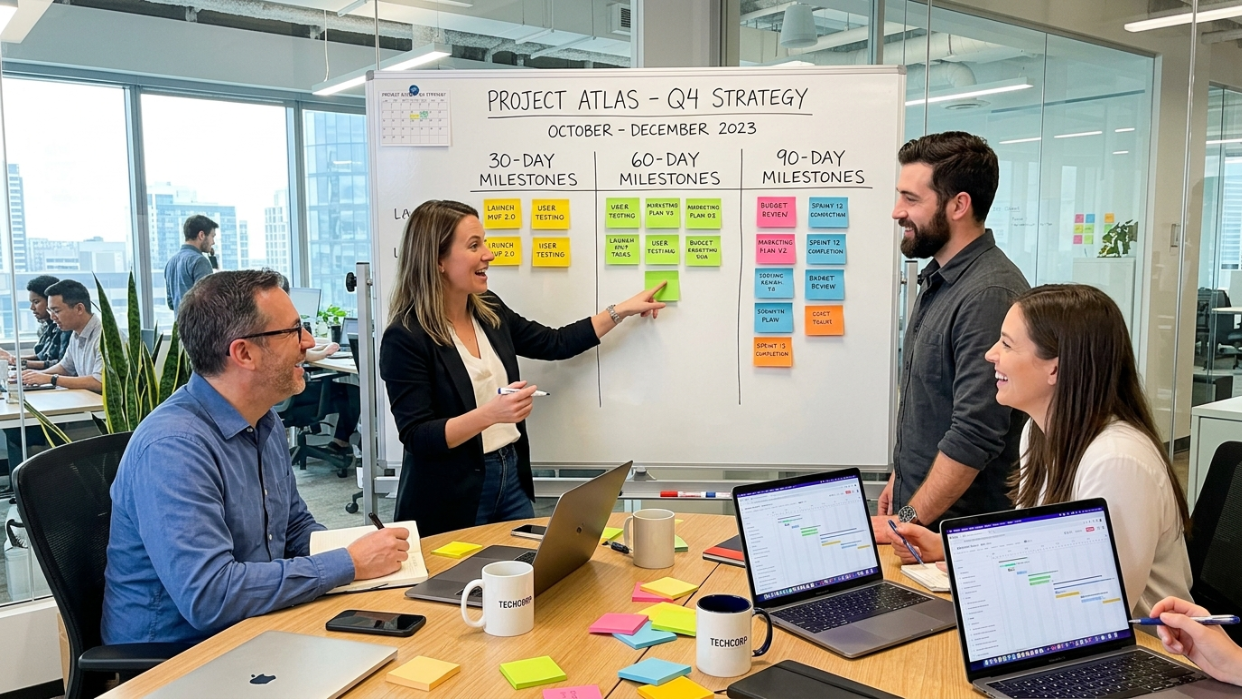
One of the clearest signals of agency quality is what happens in the first 90 days. Here is what a strong engagement should cover.
Days 1 to 30: Audit and Foundation
Business model and margin review
Existing program audit (if applicable)
Platform and network audit
Tracking QA (pixel, server-side, promo code, attribution)
Commission structure review
Partner mix analysis
Top partner and dormant partner review
Compliance and brand-safety audit
Competitor affiliate landscape scan
KPI baseline
90-day plan
Why tracking QA matters immediately: a practitioner on Reddit described discovering that an Awin implementation on Shopify was firing on every order confirmation, regardless of whether the order came from affiliate traffic. Returns were not automatically reversed before commission validation. The brand was paying commissions on organic traffic and refunded orders until someone investigated the data.
This is a concrete example of why “the network is installed” does not equal “the program is managed.” Our affiliate program audit checklist covers the full scope of what to look for in those early audits.
Days 31 to 60: Recruitment and Activation
Define ideal partner profiles by intent, category authority, and funnel role
Start targeted outreach (not mass invites)
Review inbound applications
Build structured onboarding flows
Create content angles and draft review processes
Negotiate placements
Configure commission groups by partner type
Update creative assets and product feeds
One Reddit practitioner managing B2B SaaS programs emphasized that most programs treat onboarding as an event (“welcome, here’s your link”) when it should be a 30 to 60 day structured activation sequence with follow-ups, content angles, comparison points, and draft review. The difference between “approved” and “actively producing” is where agency value shows up.
Days 61 to 90: Optimization and Reporting
First campaign performance review
Partner activation rate analysis
Commission elasticity testing
Fraud and compliance checks
Conversion and EPC analysis
New vs. returning customer analysis
Placement ROI assessment
Partner mix rebalancing
Reporting cadence established
Next-quarter roadmap
What Metrics Should Be Reported
A strong affiliate agency vs affiliate network comparison should include what gets measured, not just what gets managed.
Revenue and Efficiency
Affiliate-attributed revenue, orders or leads, conversion rate, AOV, CPA/CAC, ROAS contribution, commission cost, network fees, agency fees, contribution margin, and LTV/CAC where available.
Partner Quality
Active partners, revenue-active partners, new partners recruited, activation rate, partner type mix, top 10 partner concentration, content/editorial vs. coupon/loyalty split, and new vs. existing customer rate by partner type.
Incrementality and Attribution
New-customer share, assisted conversions, last-click vs. assisted impact, coupon code leakage, checkout interception, trademark/paid-search violations, and partner overlap with other channels.
Operations and Compliance
Pending/validated/reversed transactions, refund reversal rate, compliance violations, brand bidding events, fraud flags, broken links, and publisher response time.
One practitioner managing a large publisher’s affiliate links reported that after weekly link audits on a publisher with roughly 4 million monthly visits, about 1 in 4 affiliate links were broken, dead, or redirecting away from the intended product. Dashboards show clicks that converted but do not show clicks that hit broken pages. Networks report what they can track. Mature program management needs link QA, product-feed hygiene, and redirect checks that go beyond standard dashboards.
Awin’s 2025 webinar with Forrester confirmed that among marketers’ top challenges were measuring ROI, inconsistent data quality, lack of internal talent, and fraudulent activities. These challenges map directly to agency value. Source: Awin/Forrester
Modern Partner Types Beyond Traditional Affiliates
The affiliate agency vs affiliate network question gets more complex as the channel expands. Today’s partner ecosystem includes:
Editorial commerce publishers (product reviews, buying guides, “best of” roundups)
Review and comparison sites
Content creators and influencers
TikTok Shop affiliates (creator-driven commerce on a rapidly growing platform)
Amazon affiliates (publishers driving traffic to Amazon listings)
B2B SaaS partners (integration partners, marketplace listings, review platforms)
Fintech and finance partners
Cashback and loyalty platforms
Technology partners (browser extensions, price comparison tools)
Brand-to-brand partnerships
AI-visible publishers whose content gets cited by answer engines like ChatGPT, Perplexity, and Gemini
That last category is increasingly important. Brands that work with high-authority affiliate publishers trusted by AI platforms gain visibility in a channel that answer engine optimization specifically targets.
A practitioner with nearly 10 years of affiliate management experience noted on Reddit that finding serious affiliates still comes down to word of mouth, conferences, and LinkedIn. Publisher access is not only a platform search filter. It is relationship capital built over years.
How Hamster Garage Solves This Problem
Hamster Garage is not a network or a self-serve software tool. It is the operating team that runs affiliate and partnership programs for ambitious brands.
What Hamster Garage Delivers
Hamster Garage builds and manages affiliate programs, handling partner recruitment, commission economics, platform management, brand protection, and performance optimization. The approach covers five core services: Affiliate Marketing, Global Partner Marketing, Answer Engine Optimization, Amazon Affiliates, and TikTok Shop Affiliates.
Who the Service Is For
Growth-stage and larger brands with meaningful revenue
Companies in tech, finance, B2B, marketplace, DTC, and consumer goods
Teams without internal affiliate expertise, or teams that need specialist execution alongside internal oversight
Brands that want incremental growth beyond paid search and social
Programs dominated by coupon or loyalty partners that need diversification
Companies expanding across global markets, Amazon, or TikTok Shop
What Platforms Are Covered
Hamster Garage has deep multi-platform expertise including Impact.com (as an Impact Platinum Managing Partner) and PartnerStack (as a Gold Partner), along with Amazon affiliate tools, TikTok Shop affiliate systems, and compliance monitoring. For brands needing broader partnership marketing across enterprise partner ecosystems, the service extends beyond classic affiliate networks.
What Does It Cost?
Hamster Garage does not publish public retainer tiers or packaged plans. Engagements are scoped through consultation based on program maturity, number of platforms, partner recruitment needs, regions, channel scope, compliance requirements, and reporting complexity.
Proof: Mature Programs Need More Than Network Access
These case studies, from Hamster Garage’s client-provided data, show the difference between having affiliate infrastructure and actively operating the channel.
Burrow: Hamster Garage diversified the partner base across content and lower-funnel partners, using Skimlinks editorial scale and Capital One placements. Result: affiliate-driven sales increased 30% YoY, partner base grew 71%, and revenue-active partners grew 200%. Read the Burrow case study.
Global ride-sharing platform: Using commission elasticity testing, targeted increases, value-based earnings, and partner diversification, the team delivered $4.8M in annualized savings while still achieving 7% program growth and 6.9% growth in first-time rides.
Xero: Hamster Garage launched PartnerStack, added Impact, diversified partners, and built compliance and optimization frameworks. Result: +1,200% paid conversions and +700% signups in 18 months, with CPA down approximately 49% to $399. Read the Xero case study.
Redtiger (Amazon): Five partners had been driving 85% of revenue. After recruitment and activation using PartnerBoost, mass media outreach, and CPAi usage, affiliate revenue grew 5,616% quarter over quarter with $147.5K incremental in Q1 and a 450% increase in revenue-active partners.
Oars + Alps: Dangerous revenue concentration, dormant partners, and fraud risk. After recruitment, reactivation, payout restructuring, and compliance cleanup: +309% sales, +144% conversions, +220% transactions, and +112% AOV in four months.
Buyer Checklist: Questions to Ask Before Choosing
Key Questions to Ask an Affiliate Network or Platform
Does the network have active publishers in your exact category and geographic target?
What partner types are strongest on the platform: editorial, coupon, loyalty, creators, B2B, Amazon, or TikTok Shop?
What are all associated costs: monthly platform fees, tracking/transaction overrides, setup costs, and service tiers?
Can you configure flexible commission rules by partner type, SKU, customer type (new vs. returning), or region?
What tracking technologies are supported: pixel, server-to-server (S2S), promo code attribution, cross-device tracking?
How are product returns, order cancellations, and commission validation windows handled automatically?
What built-in fraud detection, trademark protection, and paid-search monitoring tools exist?
Key Questions to Ask an Affiliate Agency
Who will manage our account day-to-day, and what is your manager-to-client ratio?
Which platforms and networks do you operate in regularly?
How do you proactively recruit and activate partners outside of standard platform directories?
How do you define and measure incremental affiliate revenue versus organic or existing traffic?
How do you prevent coupon and cashback over-attribution at checkout?
What partner types will you prioritize for our specific business model and profit margins?
What does your 30-60-90 day onboarding and activation plan look like?
Red Flags When Evaluating Partners
Network Claims: "Joining our network will automatically bring publishers and revenue to your program."
Agency Claims: "We approve all publisher applications to build rapid volume."
Reporting Gaps: "We only report topline revenue numbers" (without showing partner mix, new vs. returning split, or margin impact).
Attribution Blindness: Coupon and loyalty sites make up 80%+ of program revenue and no one can prove incrementality.
Pitch Disconnect: Senior executives pitch your business during sales calls, but account management is handed off to junior staff without industry experience.
Want a straight answer on your affiliate setup? If your brand is deciding between network-only, agency-managed, or hybrid affiliate operations, contact Hamster Garage to assess your platform, partner mix, commissions, and growth potential.
Need Clarity on Your Affiliate Setup?
If your brand is deciding between network-only, agency-managed, or hybrid affiliate operations—or if you suspect your current program is over-indexed on coupon codes—we can help.
Contact Hamster Garage to receive a clear audit of your platform setup, partner mix, commission structures, and growth opportunities.
FAQ
What is the difference between an affiliate agency and an affiliate network?
An affiliate network is the infrastructure that connects advertisers and publishers, handling tracking, reporting, links, and payments. An affiliate agency is the team that manages the program on top of that infrastructure, including partner recruitment, activation, commission strategy, compliance, reporting, and optimization. A network gives you the system. An agency gives you the operator.
Do I need an affiliate network if I hire an affiliate agency?
Usually, yes. An agency typically does not replace tracking and payment infrastructure. It operates the program on a platform or network such as Impact, PartnerStack, Awin, CJ, Rakuten, or another tool suited to the brand’s needs.
Can I run an affiliate program with only a network?
Yes, if someone in-house actively manages the program. Network-only works when a capable affiliate manager owns recruitment, approvals, onboarding, commissions, campaigns, compliance, and reporting week to week. If no one owns those tasks, the program often becomes passive and coupon-heavy.
Does an affiliate network recruit affiliates for you?
A network may provide a publisher directory, marketplace, recommendations, or application flow. But access to publishers is not the same as active recruitment. The brand, agency, or managed-service team still needs to identify the right partners, pitch them, onboard them, and keep them active.
Is an affiliate agency the same as an OPM?
Yes. In affiliate marketing, OPM stands for outsourced program management. It is the traditional term for an affiliate agency or specialist that manages an advertiser’s affiliate program on their behalf.
What costs more, an affiliate network or an affiliate agency?
The right comparison is total channel cost: platform fees, partner commissions, tracking/transaction fees, agency fees, paid placements, internal oversight time, and margin impact. A network charges software and infrastructure fees. An agency charges a retainer, performance fee, or scoped project fee. Most serious programs invest in both.
When should a brand hire an affiliate agency?
Hire an affiliate agency when the program has no dedicated owner, revenue has plateaued, the partner mix is too concentrated in coupon or loyalty, compliance risks are increasing, the brand needs new partner types (editorial, creator, Amazon, TikTok Shop, B2B), or the internal team lacks affiliate expertise and publisher relationships.
What should happen in the first 90 days with an affiliate agency?
A strong first 90 days includes tracking and program audits, partner mix analysis, commission review, compliance checks, recruitment planning, targeted outreach, structured onboarding, activation campaigns, reporting setup, and early optimization. By day 90, the brand should have a clear picture of partner quality, channel economics, and a roadmap for the next quarter.
Latest Articles

.svg)









































.png)


.png)
.png)
.png)

.png)
.png)
.png)


.avif)

.svg)
