.svg)
Affiliate Content Partners Ecommerce: 12 Best Types (2026)


.svg)
TL;DR
Ecommerce affiliate content partners are publishers, creators, review sites, newsletters, shopping platforms, loyalty programs, and other partners that influence customers before or during a purchase. The 12 partner types covered here range from mass-media publishers and niche review sites to TikTok Shop creators, YouTube channels, card-linked offers, coupon sites, and community-based content.
The right partner mix depends on your product category, margins, customer acquisition goals, and ability to measure incremental revenue. Content and creator partners can help generate product discovery and consideration, while coupon, cashback, and shopping partners often play a stronger role closer to conversion.
This guide compares all 12 partner types by funnel role, typical compensation structure, recruitment approach, scalability, incrementality considerations, and management requirements.
What Are the Best Ecommerce Affiliate Content Partners?
The best ecommerce affiliate content partners are publishers, niche review sites, creators, YouTube channels, newsletters, shopping platforms, loyalty programs, card-linked offer providers, and selected coupon partners. The right mix depends on your funnel, margins, customer acquisition goals, and incrementality. Content and creator partners generally influence customers earlier in the buying journey, while coupon and cashback partners tend to operate closer to checkout.
How We Evaluated Ecommerce Affiliate Content Partners
The 12 partner types in this guide are evaluated using five practical criteria:
Evaluation Criteria | What We Look At |
|---|---|
Customer acquisition role | Whether the partner introduces, influences, or closes a purchase |
Incrementality potential | How likely the partner is to create new demand rather than capture an existing conversion |
Economics | Typical commission structure, placement fees, product costs, and margin considerations |
Scalability | How easily the partner type can be expanded across products, markets, or audiences |
Management complexity | Recruitment difficulty, content requirements, compliance, attribution, and ongoing relationship management |
Commission ranges in this guide should be treated as planning ranges rather than universal market rates. Actual payouts vary by product category, gross margin, average order value, customer lifetime value, partner quality, platform, geography, and negotiation.
Incrementality ratings are also directional. A content publisher is not automatically incremental, and a coupon or cashback partner is not automatically non-incremental. Ecommerce brands should test their own partner groups before changing commissions or removing partners.
Last updated: September 2026.
What Are Ecommerce Affiliate Content Partners?
Ecommerce affiliate content partners are publishers, creators, and digital platforms—including mass media outlets, niche reviewers, TikTok creators, and newsletter authors—that produce original, educational content to introduce products to new audiences. Unlike bottom-of-funnel coupon sites, content affiliates drive upper- and mid-funnel brand discovery and earn performance-based commissions (typically 8% to 20% CPA) on resulting sales.
Key Takeaways for Ecommerce Brands
Diversify partner types: Combine editorial publishers, niche review sites, creators, video partners, newsletters, shopping platforms, and carefully managed lower-funnel partners rather than relying on one source of affiliate revenue.
Match commissions to partner role: Partners that create original content or introduce new customers may require different economics from partners that primarily influence customers at checkout.
Measure incrementality: Do not assume that a sale credited to an affiliate was caused entirely by that affiliate. Compare new versus returning customers, partner position in the customer journey, coupon usage, and controlled test results where possible.
Recruit differently by partner type: A mass-media publisher requires a different outreach strategy from a TikTok creator, niche review site, newsletter operator, or loyalty platform.
Manage the full funnel: A balanced affiliate program can include partners that create awareness, influence consideration, and assist conversion.
Protect the brand: Affiliate recruitment should include disclosure requirements, content standards, trademark rules, coupon controls, and ongoing compliance monitoring.
At-a-Glance: 12 Ecommerce Affiliate Content Partner Types
Partner Type | Funnel Role | Typical Compensation | Best For | Incrementality Potential | Recruitment Difficulty |
|---|---|---|---|---|---|
Mass Media / Editorial | Upper to mid | CPA, flat fee, or hybrid | Authority and product discovery | High | High |
Niche Review & Content Sites | Mid | CPA | Long-tail research traffic | High | Medium |
Creator / Influencer Affiliates | Full funnel | CPA, stipend, or hybrid | Social proof and product discovery | High | Medium |
TikTok Shop Creators | Discovery to conversion | CPA or platform-specific commission | Social commerce | High | Medium |
YouTube Commerce Creators | Mid to lower | CPA or hybrid | Demonstrations and product comparisons | High | Medium |
Newsletter / Email Partners | Mid to lower | CPA, CPL, or flat fee | Owned-audience distribution | Medium-High | Medium |
Comparison & Shopping Aggregators | Lower | CPA or CPC | Product comparison and shopping intent | Medium | Medium |
Loyalty & Cashback | Lower | CPA or revenue share | Repeat purchases and promotions | Low-Medium | Low-Medium |
Card-Linked Offers | Lower / offline | CPA or transaction-based | Omnichannel sales | Medium | High |
Coupon & Deal Sites | Bottom funnel | CPA | Promotions and conversion volume | Variable | Low |
Technology / Conversion Partners | On-site | CPA or revenue share | Conversion and AOV optimization | Variable | Medium |
Reddit & Community Content | Upper to mid | Varies | Experience-led discovery and discussion | Potentially high | High |
Important: These incrementality classifications are directional, not guarantees. Actual performance depends on the individual partner, customer journey, attribution model, promotional terms, and testing methodology.
Now, the detailed breakdown of each partner type.
1. Mass Media / Editorial Publishers
Best for: Established ecommerce brands that want top-of-funnel authority and new customer acquisition at scale.
Mass media partners are the blue-chip affiliates: Forbes, Wirecutter, Business Insider, CNN Underscored, Condé Nast publications, Vox Media, and similar editorial properties. These publishers reach millions of consumers across every stage of the purchase funnel.
For some of these publishers, content is strictly editorial, meaning the brand doesn’t get to pitch its way in. The editorial team selects products independently. But once a brand has established a relationship with a publisher, new partnership opportunities tend to emerge, including through affiliate technology and pay-on-performance models.
Commission benchmarks: Content and editorial partners typically work on CPA or flat-fee arrangements. Rates for well-known publishers run between 10% to 15% per sale, with some brands going up to 20% in exchange for premium visibility. For detailed rate guidance, see this ecommerce commission benchmarks guide.
How they connect: 23 of the top 25 publishers worldwide use Skimlinks, which provides a single connection to 48,500 merchants and 50+ affiliate networks globally. Sovrn //Commerce (formerly VigLinks) similarly auto-converts ordinary product links into affiliate links. If your brand isn’t connected through these aggregators, you’re invisible to most editorial teams.
Recruitment tactics:
Join Skimlinks and ensure your brand profile and commission rates are competitive
Build direct relationships with commerce editors (not ad sales teams)
Provide exclusive product access, data, or story angles that give editors a reason to feature you
Offer competitive commissions that stand out in publisher dashboards
Tradeoffs:
Long lead times. Editorial calendars move months in advance.
You can’t control the narrative. Editors write what they want.
High competition. Every brand in your category is pitching the same editors.
One affiliate practitioner documented on Substack that removing coupon partners and doubling down on press partnerships increased a client’s affiliate revenue by 181% in six months. That’s a compelling case for prioritizing editorial partners even when they’re harder to recruit.
When Hamster Garage managed the affiliate program for Burrow, the DTC furniture brand, the team scaled Skimlinks editorial placements and secured Capital One partnership features. The result: affiliate-driven sales grew 30% year over year, and the revenue-active partner base expanded by 200%.
2. Niche Review & Content Sites
Best for: Brands in specialized categories (outdoor gear, pet products, home improvement, beauty) where targeted expertise drives purchase decisions.
These are independent bloggers, niche site owners, and small-to-midsize publications that create product reviews, comparison posts, buying guides, and how-to content around specific topics. What makes them valuable is that they tend to drive interest-based customers rather than deal-seekers.
A kitchen knife brand, for example, benefits more from appearing in a detailed review on a cooking blog than from a 15% off coupon on RetailMeNot. The readers arriving through niche content are earlier in their decision process and far more likely to be genuinely new customers.
Commission benchmarks: 8-15% CPA is standard, with many brands offering tiered rates that increase as partners drive more volume.
Recruitment tactics:
Search for “[your category] + best + review” and identify the sites already ranking
Check if they’re already in your affiliate network but inactive, then reach out with personalized activation offers
Provide free product samples so reviewers can create authentic content
Offer exclusive discount codes that give the reviewer’s audience a specific reason to buy through their link
Tradeoffs:
Individual niche sites drive modest volume compared to mass media
Content quality varies wildly; you need to vet each site
SEO algorithm changes can devastate a niche site’s traffic overnight
Real-world signal: Affiliate managers on forums consistently report that content affiliates are the most desirable partner type because they drive new customers. The challenge is that recruiting them takes more hands-on effort than signing up deal sites.
3. Creator / Influencer Affiliates
Best for: Brands with visually appealing or lifestyle-oriented products that benefit from social proof and personal endorsement.
Creator affiliates sit at the intersection of influencer marketing and performance marketing. Instead of (or in addition to) paying flat fees for sponsored posts, brands compensate creators on a performance basis, paying commissions when their audience actually buys.
The most effective structure in 2026 is hybrid: a base content stipend to offset production costs, plus a CPA commission for ongoing performance. Creators, especially those with mid-tier followings (10K-500K), prefer this model because it respects their time while aligning incentives.
Commerce content, meaning publisher-led and creator-led product roundups, gift guides, and deal posts, grew 34% year over year, making it the fastest-growing affiliate format.
Commission benchmarks: 10-20% CPA on top of content stipends ranging from $200-$5,000+ depending on audience size and engagement.
Recruitment tactics:
Use creator marketplaces and outreach tools to identify creators already talking about your category
Start with gifting campaigns and convert high-performers into paid affiliates
Provide creators with custom landing pages, unique codes, and real-time performance dashboards
For a deeper look at this shift, read about performance-based creator marketing and how it’s reshaping the affiliate playbook.
Tradeoffs:
Content production requires upfront investment even in hybrid models
Creator relationships need ongoing management; they’re not set-and-forget
Brand safety risk if creators go off-script or create low-quality content
4. TikTok Shop Creator Affiliates
Best for: Beauty, skincare, food and beverage, fitness, fashion, and home organization brands ready for social commerce at scale.
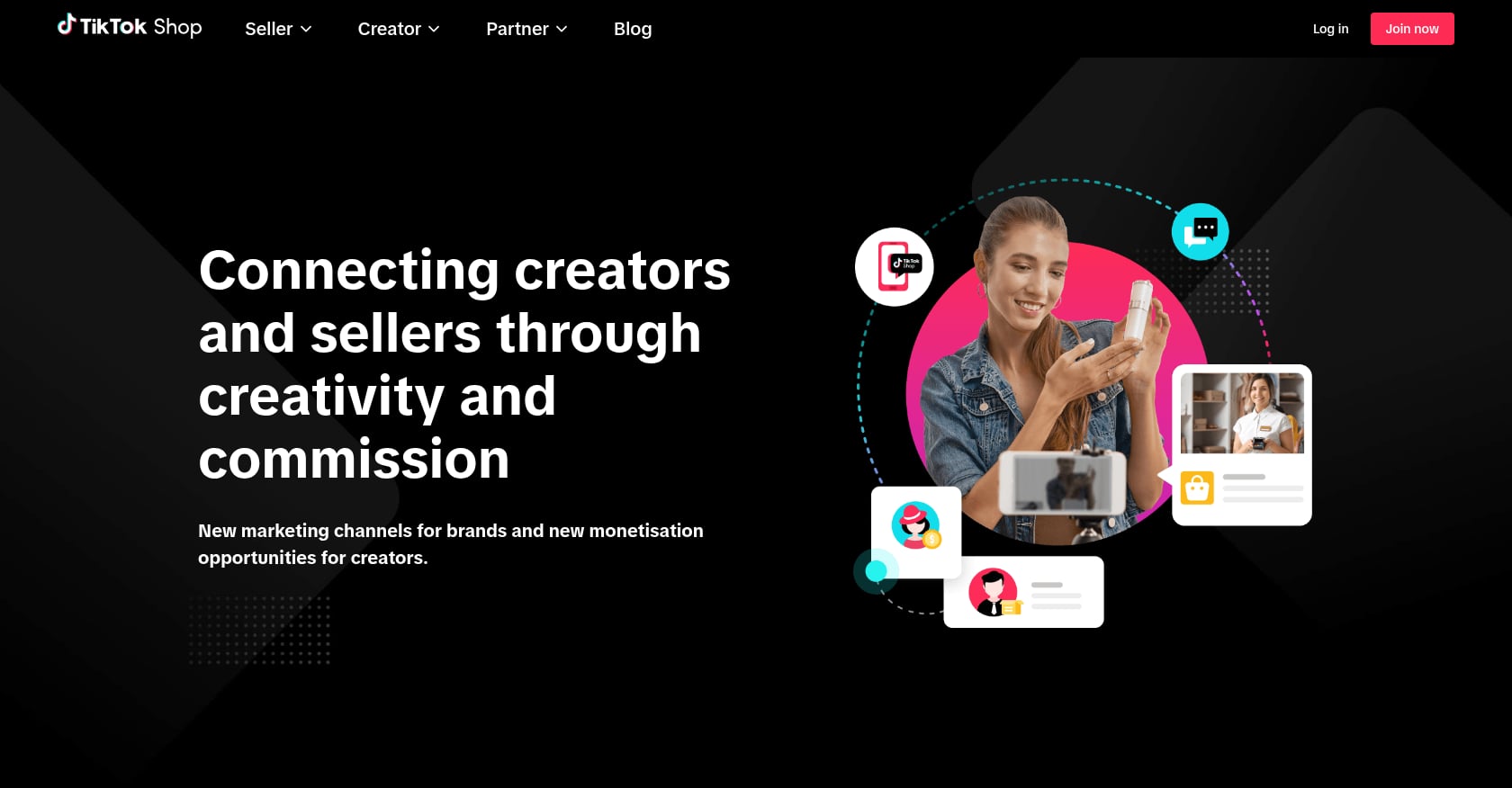
TikTok Shop did roughly $15.82 billion in US sales in 2025, up 108% in a single year, and it now accounts for about 18% of all US social commerce. This isn’t a test channel anymore. It’s a primary sales channel for many consumer brands.
The distribution of results is extreme. The top 0.5% of creators (about 4,000 accounts) drive 38% of all affiliate GMV. The top 200 creators alone generate 31% of affiliate revenue. This power-law dynamic means creator recruitment and retention is the single most important operational lever for brands on TikTok Shop.
Commission benchmarks: 10-20% CPA is standard, with top categories like beauty often running 15-20%.
Key stats: Brands with proper infrastructure achieve 3.8x to 5.2x ROI on commission spend, compared to 2.1x to 2.9x for those running programs without dedicated management.
Recruitment tactics:
Use TikTok’s native affiliate marketplace to connect with open collaboration creators
Recruit target collaboration creators individually based on content quality and audience fit
Send product samples at scale to generate organic content, then convert top performers into ongoing affiliates
Invest in creator relationship management, not just one-off campaigns
For brands exploring this channel, the TikTok Shop creator partnerships guide breaks down the full operational playbook.
Tradeoffs:
Platform risk. TikTok’s regulatory status remains uncertain in some markets.
Content is ephemeral. Unlike SEO-driven blog posts, TikTok videos have short shelf lives.
The best creators have leverage and may demand higher rates or exclusive terms.
5. YouTube Commerce Creators

Best for: Products that require demonstration, explanation, or comparison (electronics, software, fitness equipment, kitchen tools, beauty).
YouTube is a natural fit for affiliate content because long-form video allows creators to demonstrate products, compare alternatives, and share genuine experiences. “Best [product category]” and “[product] review” videos consistently rank in both YouTube and Google search results, driving high-intent traffic for months or years after publication.
Unlike TikTok’s short-form impulse buying, YouTube viewers arrive with research intent. They’re comparing options and looking for someone they trust to help them decide. That trust translates into strong conversion rates.
Commission benchmarks: 8-15% CPA or hybrid models with content stipends for dedicated reviews.
Recruitment tactics:
Search YouTube for your product category and identify creators already reviewing competitors
Offer product samples and exclusive first-look access
Provide custom affiliate links and promo codes optimized for verbal callouts in videos
Consider sponsoring dedicated review videos with a CPA bonus layer
Practitioners on Reddit note that YouTube and Reddit are both platforms uniquely suited for affiliate marketing because both reward personal experience, unboxings, and authentic product recommendations.
Tradeoffs:
Production costs are higher than written content, so creators expect more support
Long lead times for video production and editing
You can’t control what a creator says in their review
6. Newsletter / Email Partners
Best for: Brands seeking scalable, owned-audience distribution with predictable economics.
Newsletter affiliates are a distinct and powerful partner type that many ecommerce brands overlook. These partners, ranging from large email publishers to niche Substack authors, have built engaged subscriber lists that trust their recommendations.
The economics can be remarkable. In one documented case, a hospitality platform scaled third-party email from $10K to over $700K per month at under $100 CPL. That kind of scalability, combined with compliance rigor around CAN-SPAM and suppression lists, makes email partners a serious channel.
Commission benchmarks: Flat CPL ($5-$100+ depending on the vertical and list quality) or CPA models.
Recruitment tactics:
Identify newsletters in your category using discovery tools and industry directories
Negotiate test placements with performance-based escalation clauses
Provide dedicated landing pages optimized for email traffic
Require compliance documentation including suppression list management
Tradeoffs:
Compliance risk is real. Sloppy email partners can damage your brand reputation and create legal exposure.
List quality varies enormously. Some publishers buy or rent low-quality lists.
Requires active monitoring and regular suppression list updates.
7. Comparison & Shopping Aggregators
Best for: Full-price products in competitive categories where consumers actively compare options across brands.
Think of these as product search engines. Sites like ShopStyle and Modesense aggregate products across brands, letting consumers compare features, prices, and availability. They also feature in Google Shopping results, providing additional visibility.
These partners work particularly well for fashion, home decor, and lifestyle categories where visual discovery and cross-brand comparison are natural shopping behaviors.
Commission benchmarks: 5-12% CPA, sometimes with pay-per-click components.
Recruitment tactics:
Ensure your product feed is optimized with accurate pricing, high-quality images, and complete product descriptions
Join aggregator networks directly or through platforms like Skimlinks
Maintain competitive pricing, as these platforms surface price comparisons prominently
For tips on getting your product data right, read this guide to affiliate product feed optimization.
Tradeoffs:
Price-sensitive traffic. Visitors are comparing, and they’ll choose the cheapest option.
Limited brand storytelling. Your products appear alongside competitors with minimal differentiation.
You’re competing on price and reviews rather than relationship.
8. Loyalty & Cashback Partners
Best for: Brands focused on customer retention, repeat purchases, and reaching large existing user bases.
Loyalty and cashback partners like Rakuten, TopCashback, and BeFrugal have dedicated, engaged user bases. These sites give consumers rewards in the form of cashback, redeemable points, airline miles, college fund accounts, and more.
The value proposition is straightforward: you tap into a large, active audience of motivated shoppers. The limitation is that many of these shoppers would have purchased anyway, making the incrementality question important.
Commission benchmarks: 3-10% CPA, with rates often lower because these partners are closer to the bottom of the funnel.
Recruitment tactics:
Join major cashback networks through your affiliate platform
Negotiate placement fees for premium visibility (homepage features, email inclusions)
Run limited-time elevated cashback promotions to drive spikes in volume
Tradeoffs:
Lower incrementality compared to content-driven partner types
Shoppers trained to check cashback portals before every purchase
Commission stacking with coupon sites can erode margins
9. Card-Linked Offer (CLO) Partners
Best for: Omnichannel brands that sell both online and in-store, especially in categories like grocery, QSR, fuel, and travel.
Card-linked offers are one of the most interesting emerging partner types in the affiliate space. They work by tying promotional offers directly to a consumer’s credit or debit card. When the consumer makes a qualifying purchase, the reward is automatically applied without any coupon code, browser extension, or affiliate link.
Banks like Citi and Capital One are classic CLO publishers, bringing established credibility and massive user bases. Rewards apps like Dosh and Airtime Rewards operate as card-linked offer businesses as well.
Traditional affiliate tracking struggles with offline purchases. CLOs solve this by tying the offer directly to the card, enabling brands to attribute in-store or app-based conversions as easily as online ones. The UK’s Affiliate and Partnership Marketing Association named card-linked offers one of its 2026 affiliate growth drivers.
Commission benchmarks: CPA per transaction, typically negotiated directly with the CLO provider. Rates vary widely by category and card network.
Recruitment tactics:
Work with CLO platforms that integrate with major card networks
Start with a test campaign in a specific geographic region or product category
Use CLO data to understand offline purchase behavior and optimize broader marketing
Tradeoffs:
Newer channel with less established best practices
Integration can be technically complex
Limited to card-present transactions (though this is also the advantage)
10. Coupon & Deal Sites
Best for: Driving volume during sales events, clearance, and promotions, but only with strategic management.
When you first launch an affiliate program, most transactions will come through coupon and deal sites. This is typical. The question is whether you let them dominate your program or manage them strategically.
Here’s the uncomfortable truth practitioners consistently surface: coupon sites like Honey and Coupon Cabin can take credit for sales that should go to your content partners. Browser extensions that auto-inject coupon codes at checkout intercept customers who were already going to buy, then claim the affiliate commission. If you have unmanaged coupon affiliates in your program, you are likely paying extra to acquire customers who would have purchased anyway.
Programs adopting incrementality testing report that 18-24% of attributed conversions would have occurred without affiliate touchpoints, a benchmark the industry now uses to renegotiate commission structures. Coupon sites account for a disproportionate share of those non-incremental conversions.
Commission benchmarks: 3-8% CPA, deliberately lower than content partners to reflect lower incrementality.
How to manage them:
Don’t eliminate coupon partners entirely. Instead, limit commissions and use attribution rules that prioritize upper-funnel partners.
Exclude browser extension affiliates that inject at checkout
Use coupon control tools to manage which codes are valid in the affiliate channel
Reserve your best commission rates for partners driving genuinely new customers
For a full framework on managing this partner type, check out this affiliate coupon strategy guide.
Tradeoffs:
Highest volume, lowest incrementality
Can cannibalize other affiliate partners’ commissions
Requires constant monitoring and active management
Need help rebalancing your program away from coupon dependency? Reach out to Hamster Garage for a program audit.
11. Technology / Conversion Partners
Best for: Brands looking to improve on-site conversion rate, average order value, and customer experience through pay-for-performance technology.
Technology partners are an umbrella category for ecommerce solutions that run on an affiliate model. These include exit-intent overlays, personalized product recommendations, shipping threshold nudges, and similar conversion-focused tools that embed directly into your site.
The appeal is the payment model: instead of paying a SaaS subscription, you pay the technology partner on a CPA or revenue-share basis. They only earn when they measurably contribute to a conversion.
Commission benchmarks: CPA or revenue share, typically 1-5% of the incremental revenue they demonstrably influence.
Recruitment tactics:
Evaluate technology partners through your affiliate platform’s partner marketplace
Run A/B tests to measure the true incremental impact of each technology
Set clear attribution rules so these partners are credited only for conversions they actually influenced
Tradeoffs:
Some technology partners claim credit too aggressively (e.g., triggering on every session)
Can conflict with your existing CRO tools
Requires careful attribution setup to avoid overpaying
For guidance on picking the right affiliate platform to manage technology partners alongside other affiliate types, see the linked guide.
12. Reddit & Community / UGC Partners
Best for: Brands that benefit from authentic, experience-driven recommendations and want visibility in the growing UGC search results.
UGC sites, led by Reddit, have been the big winners in the reshuffling of search visibility. Google increasingly surfaces Reddit threads, forum posts, and community discussions for product-related queries, and AI-powered search tools like Perplexity and ChatGPT pull heavily from these authentic sources.
This creates a new type of affiliate content partner: community-native publishers and creators who build genuine authority through participation, not just content production. Smart brands should consider Reddit-native partnerships, either through direct relationships with influential community members or through platforms that facilitate authentic product discussions.
Practitioners on the AffiliateInsider Substack note that Reddit traffic has skyrocketed and the shift is seismic. Indie affiliate publishers built purely on keyword targeting are losing ground while community-driven UGC gains.
Commission benchmarks: Varies widely. Some community partners work on traditional CPA, others through gifting and relationship-building that doesn’t fit neatly into affiliate tracking.
Recruitment tactics:
Identify active, respected contributors in subreddits relevant to your product category
Never lead with affiliate pitches. Build genuine relationships first.
Consider sponsored posts on relevant subreddits as a starting point
Work with agencies that understand community norms and can recruit authentically
Tradeoffs:
Community members are allergic to overt marketing. Heavy-handed approaches backfire spectacularly.
Attribution is messy. Many community-driven purchases aren’t captured by standard tracking.
Requires patience and authenticity that doesn’t come naturally to most marketing teams.
Related to this trend, brands seeking visibility in AI-powered search should explore answer engine optimization strategies that use high-authority affiliate publishers to earn citations across AI platforms.
Performance Benchmarks by Partner Type
To help you compare channels as you scale, here is how the 12 partner types stack up across commission rates, conversion expectations, and primary performance metrics:
Partner Type | Typical CPA Range | Expected Conversion Rate | Net Incrementality | Primary Success Metric |
Mass Media / Editorial | 10% – 20% (or Flat Fee) | 1.5% – 3.0% | High | New Customer Acquisition |
Niche Review Sites | 8% – 15% | 2.5% – 5.0% | High | Organic Search Traffic |
Creator / Influencer | 10% – 20% + Stipend | 1.0% – 2.5% | High | Social Engagement & GMV |
TikTok Shop Creators | 10% – 20% | 2.0% – 4.5% | High | Direct In-App GMV |
YouTube Commerce | 8% – 15% | 3.0% – 6.0% | High | Long-Tail Assisted Sales |
Newsletter / Email | Flat CPL or 10%–15% CPA | 2.0% – 4.0% | Medium-High | Email Click-Through Rate |
Shopping Aggregators | 5% – 12% | 1.5% – 2.5% | Medium | Referral Traffic Volume |
Loyalty & Cashback | 3% – 10% | 4.0% – 8.0% | Low-Medium | Repeat Purchase Volume |
Card-Linked Offers (CLO) | 5% – 15% Per Txn | 5.0% – 10.0% | Medium-High | Offline & Omnichannel Sales |
Coupon & Deal Sites | 3% – 8% | 5.0% – 12.0% | Low | Gross Order Volume (GOV) |
Conversion Tech | 1% – 5% Rev Share / CPA | 10.0% – 20.0% | Medium | On-Site Conversion Uplift |
Reddit & UGC | Tiered CPA / Custom | 2.0% – 4.0% | High | Community Citations & Search Visibility |
How to Build a Balanced Partner Mix
The biggest risk in affiliate marketing isn’t choosing the wrong partners. It’s concentrating revenue among too few of them.
When Hamster Garage took over the Redtiger affiliate program, five partners were driving 85% of revenue. That kind of concentration is dangerous. Lose one key partner and your channel collapses. The team diversified aggressively, and the result was 5,616% quarter-over-quarter revenue growth with $147.5K in incremental revenue in Q1 alone.
The Incrementality Lens
Not all affiliate content partners for ecommerce deliver the same value. The core question for every partner relationship: would this sale have happened without this partner?
Programs adopting incrementality testing consistently find that 18-24% of attributed conversions would have occurred without any affiliate touchpoint. That means a meaningful chunk of your affiliate spend is going to partners who aren’t actually driving results.
As Matt Gilbert, CEO of Partnerize, put it: “Now that it’s shown that content can be a material component of the revenue build, the affiliate channel is in a position to take its rightful seat at the CMO’s table. It’s been perceived as a coupon and cash-back channel, but it’s not that anymore.”
Recommended Budget and Partner Mix Allocation
A healthy affiliate program functions like an investment portfolio. Depending on your brand's growth stage, aim for these partner allocation targets across the customer journey:
Funnel Stage | Target Revenue Share | Best Partner Types to Target | Primary Strategic Objective |
Upper Funnel (Awareness) | 30% – 40% | Mass Media, TikTok Shop Creators, YouTube Commerce | Brand Discovery & New Customer Acquisition |
Mid Funnel (Consideration) | 40% – 50% | Niche Review Sites, Newsletter Partners, Reddit & UGC | High-Intent Product Research & Trust |
Lower Funnel (Conversion) | 15% – 20% | CLO Networks, Selective Cashback, Managed Coupons | Margin Protection, Clearance & Order Volume |
A 4-Step Incrementality Audit Framework for Ecommerce Programs
To ensure your affiliate budget rewards true brand growth rather than passive coupon code aggregators, execute this four-step audit every quarter:
Run Holdout Tests on Lower-Funnel Segments
Pause tracking or commission payouts for specific lower-funnel partner groups—such as checkout browser extensions—for 14 to 30 days across a controlled sample. Observe whether net store sales decline or remain unchanged.
Calculate Your True Cost Per Acquisition (tCPA)
Factor all costs into your acquisition math, including affiliate commissions, network overrides, monthly SaaS fees, and discount codes redeemed.
True CPA = (Commissions Paid + Placement Fees + Discount Value) / Total Incremental Orders
Compare First-Touch vs. Last-Touch Journeys
Review your multi-touch attribution reports to identify partners who introduce customers (appearing in over 60% of paths as the first click) versus partners appearing exclusively within minutes of checkout.
Reallocate Savings to High-Incrementality Content
Reinvest saved commission spend from low-incrementality deal sites directly into creator content stipends, product gifting, and mass media editorial flat fees.
Moving Beyond Last-Click Attribution
Last-click attribution was the default across affiliate marketing platforms because it was easy to implement. In 2026, it is increasingly recognized as a measurement model that systematically misallocates credit. It rewards bottom-of-funnel partners (coupon sites, browser extensions) while undercounting upper-funnel content partners that actually introduced the customer to your brand.
The fix: implement multi-touch attribution or at minimum use first-click bonuses and tiered commissions that reward partners based on their actual role in the customer journey.
For a full framework on diversifying your affiliate channel, including how to structure commissions by partner type and funnel position, see the linked guide.
How Hamster Garage Builds Ecommerce Affiliate Partner Programs
Hamster Garage builds and manages affiliate and partnership programs for brands that want incremental, fast-scaling, brand-safe growth. The agency operates across all 12 content partner types covered in this article, from mass media editorial placements and Amazon affiliate publishers to TikTok Shop creator recruitment and AI visibility through high-authority publishers.
Who it’s for: Growth-stage and enterprise brands in consumer, tech, finance, marketplace, DTC, and B2B verticals that need their partnership channel run professionally.
Platforms covered: Impact, PartnerStack, Levanta (Amazon), TikTok Shop, and integrations across 50+ affiliate networks through aggregator relationships.
What the first 90 days look like:
Audit existing partner mix and identify concentration risks
Recruit across content partner types prioritized by incrementality
Restructure commission rates to reward upper-funnel partners appropriately
Implement compliance monitoring and brand safety protocols
Establish reporting dashboards with revenue, partner growth, and incrementality metrics
Metrics reported: Revenue by partner type, new vs. returning customer splits, partner activation rates, commission efficiency, incrementality benchmarks, and AOV trends.
What affects pricing: Program size, number of markets, partner mix complexity, and management scope. Engagements are custom-scoped.
Proof:
Burrow (DTC furniture): Partner base grew 71%, revenue-active partners increased 200%, affiliate-driven sales up 30% YoY. Read the Burrow case study.
Redtiger (Amazon electronics): Went from 5 partners driving 85% of revenue to +5,616% QoQ affiliate revenue growth and +$147.5K incremental in Q1. Read the Redtiger case study.
Oars + Alps (beauty): Cleaned up partner mix, restructured payouts, and drove +309% sales with +144% conversions in four months. Read the Oars + Alps case study.
Buyer Checklist: Questions to Ask Before Recruiting Each Partner Type
Before adding any new affiliate content partner to your ecommerce program, run through these questions:
Commission economics:
What CPA rate makes this partner profitable after accounting for product cost and margin?
Should this partner type receive a higher rate than lower-funnel partners to reflect incrementality?
Are there placement fees, content stipends, or hybrid components required?
Brand safety:
Does this partner’s content align with your brand guidelines?
What content approval process will you require?
How will you monitor ongoing compliance?
Attribution setup:
Is your tracking properly configured to credit this partner type accurately?
Are you using multi-touch or first-click bonuses to avoid systematically underpaying content partners?
Can you measure incrementality for this partner type specifically?
Exclusivity terms:
Does the partner require exclusivity in your category?
Are you comfortable with the partner also promoting competitors?
Content approval:
Do you require pre-publication review of content?
How will you handle content that misrepresents your product?
What turnaround time is realistic for approval without frustrating partners?
FAQ
What are affiliate content partners in ecommerce?
Affiliate content partners are publishers, creators, and platforms that produce editorial content (reviews, guides, videos, newsletters, social posts) featuring your products and earn a commission when their audience makes a purchase. They differ from coupon and cashback affiliates because they typically influence purchase decisions earlier in the funnel through education and recommendation rather than intercepting existing purchase intent with a discount code.
How much should ecommerce brands pay content affiliates?
For editorial and mass media publishers, 10-15% per sale is the entry point, with some brands going to 20% for premium placement. Niche review sites typically earn 8-15%. Creator affiliates often work on hybrid models combining content stipends ($200-$5,000+) with 10-20% CPA commissions. The key principle: pay content partners more than coupon partners because they deliver higher incrementality.
What’s the difference between content affiliates and coupon affiliates?
Content affiliates create original material (articles, videos, reviews) that introduces new customers to your brand. Coupon affiliates distribute discount codes to shoppers who are often already on your site or about to purchase. The incrementality gap is significant. Programs running incrementality tests find that 18-24% of attributed affiliate conversions would have happened without any affiliate touchpoint, and coupon sites account for a disproportionate share of those non-incremental conversions.
How do you recruit mass media publishers as affiliates?
Start by ensuring your brand is connected through aggregators like Skimlinks and Sovrn //Commerce, which power affiliate monetization for most major publishers. Then build direct relationships with commerce editors (not ad sales reps), offer competitive commission rates visible in publisher dashboards, and provide genuine editorial value through exclusive data, product access, or unique story angles. Expect long lead times tied to editorial calendars.
What’s the best affiliate platform for ecommerce?
The right platform depends on your business model, partner types, and scale. Impact is widely used for consumer ecommerce with a broad partner mix. PartnerStack is strong for B2B and SaaS. Levanta specializes in Amazon affiliate management. Many brands running sophisticated programs use multiple platforms simultaneously. For a deeper comparison, see this guide on choosing the right affiliate platform.
How do you measure content partner incrementality?
Run controlled incrementality tests by temporarily pausing specific partners or partner types and measuring the impact on overall sales. Use multi-touch attribution to understand each partner’s role in the customer journey. Track new vs. returning customer ratios by partner type. The industry benchmark is that 18-24% of attributed affiliate conversions are non-incremental, so establish your own baseline and adjust commissions accordingly.
Are TikTok Shop affiliates worth it for ecommerce brands?
For brands in beauty, food, fitness, fashion, and home categories, absolutely. TikTok Shop generated $15.82 billion in US sales in 2025. Brands with proper infrastructure achieve 3.8x to 5.2x ROI on commission spend. The critical success factor is dedicated creator recruitment and management, not just listing products and hoping creators find them.
How should ecommerce brands balance their affiliate partner mix?
High-performing programs in 2026 balance coupon and cashback partners with editorial publishers, review sites, creator affiliates, and emerging partner types like CLO networks and community partners. The goal is to avoid revenue concentration (no single partner type should account for more than 30-40% of program revenue) while maximizing the share of genuinely incremental conversions.
Schedule a consultation with Hamster Garage to build your affiliate content partner strategy.
Latest Articles

.svg)



















































.png)


.png)
.png)
.png)

.png)
.png)
.png)


.avif)

.svg)
